Earth's churning mantle may have helped carve the Great Unconformity
A new Nature study suggests the Great Unconformity, a vast gap in Earth's rock record, was created by slow mantle motion working together with glacial erosion. Researchers tested the idea in six computer simulations.
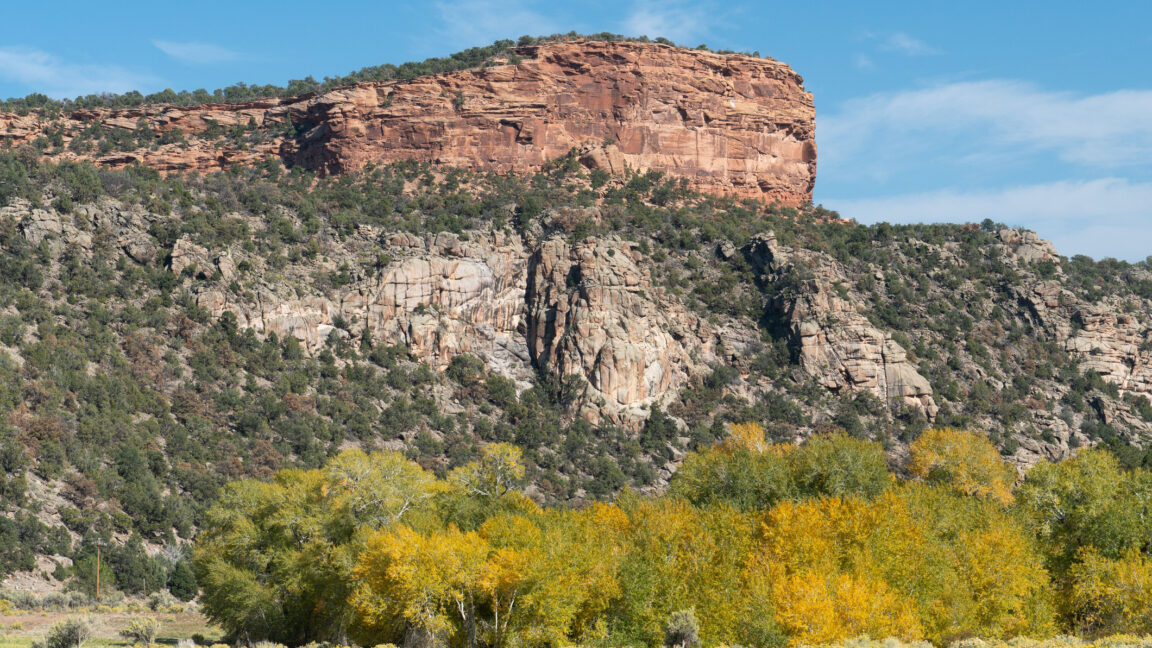
Geoscientist Nicolas Flament of the University of Wollongong in Australia and his colleague Santosh Dhungana have published a study in the journal Nature on one of geology's biggest puzzles: the Great Unconformity. It is a gap in the rock record where younger Cambrian-era sedimentary deposits sit directly on much older rocks. According to the authors' models, the gap was formed by slow currents in Earth's mantle combined with glacial erosion.
What the Great Unconformity is
In the Grand Canyon, ancient crystalline rocks lie beneath sandstones laid down as life began to diversify during the Cambrian explosion. The missing time ranges from roughly 200 million years to more than a billion. In North America, the oldest sediments resting on it are 635 to 482 million years old. It has been traced across most of North America and parts of northern Europe and northern China.
Earlier explanations
The leading explanation was glaciation: between about 720 and 635 million years ago, glaciers reached the tropics, and some scientists think the whole planet froze. But then the gap should appear everywhere, and it does not. Rifting and sea-level change also fail to account for the uneven pattern.
The role of the mantle
The team tested whether the mantle moved continents up and down. The mantle is solid, yet rock within it slowly circulates, with cold rock sinking and hot rock rising. Six simulations covered the past billion years. In five, Laurentia, the ancient core of North America, rose for a long period and then sank in the Cambrian; northern Europe and North China showed the pattern in four.
Uplift alone was too gentle to strip away enough rock. Glaciers, however, could grind away even low, gently sloping ground. When the continents sank in the Cambrian, seas flooded in and buried the eroded surface. South America and Australia went through two cycles, which would make the gap harder to see there.
The researchers acknowledge that the starting setup of the models is uncertain, and that the mantle was probably not the only process behind the Cambrian explosion.