Winter ploughing usually beats spring ploughing, but only when soil moisture is right
Polish farming portal Farmer.pl says winter ploughing is generally better than spring ploughing, provided the soil is not overly wet. Ploughing wet soil raises fuel use and reduces water storage.
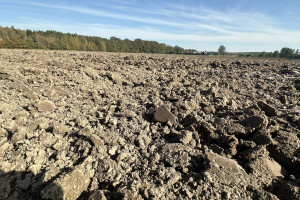
Polish agricultural portal Farmer.pl published an explainer on 3 November about when crop growers should carry out winter ploughing. It says that ploughing in late autumn or winter is almost always better than ploughing in spring, but only if soil moisture is suitable. If the soil is too wet, the work is best left undone. Ploughing starts the whole chain of mouldboard-plough cultivation, so its quality affects later farming operations.
Why wet ploughing is a problem
One of the most common mistakes is ploughing soil that is either too wet or too dry. In late autumn and winter, excess moisture is usually the bigger issue. When the soil does not crumble and whole slabs are turned over, water permeability worsens. After the first heavy rains, standing water can form on the surface and water is not fully stored.
The article also points to the cost side: in wet soil, diesel consumption rises by about 25–50%, depending on ploughing depth and soil class. Wheel slip and resistance increase.
Depth matters too. At 20 cm, the plough cuts, lifts and turns roughly 3,000 tonnes of soil per hectare, and each extra centimetre adds about 150 tonnes. Overly wet soil can be up to 30% heavier. Each additional centimetre of depth raises average fuel use by around 2%.
After wet ploughing, soil can become compacted, is harder to work in spring, and it is harder to achieve the desired crumb structure. The risk of a plough pan also rises, and oxygen-free conditions form more easily in the ploughed layer.
When to postpone
The main aim of winter ploughing is to prepare soil to take up and store as much water as possible in late autumn and winter. If it is done in very wet conditions, that advantage is lost. If field conditions are not optimal, the article advises postponing the work, for example to December. This does not apply where winter wheat is still to be sown.
Spring ploughing is treated as a fallback option. It cannot let the soil collect as much precipitation, and ploughed soil dries out faster. Winter ploughing, by contrast, destroys rodent habitats and unwanted vegetation that would draw water from the soil in early spring.