Sovereignty, sarcasm, blame: How North Africa reacted to Ceuta crisis
The mass entry of migrants into Spain's Ceuta enclave has sparked varied reactions across North Africa — Morocco highlights sovereignty, Algeria uses it to attack Rabat, while Tunisians respond with irony and ridicule.
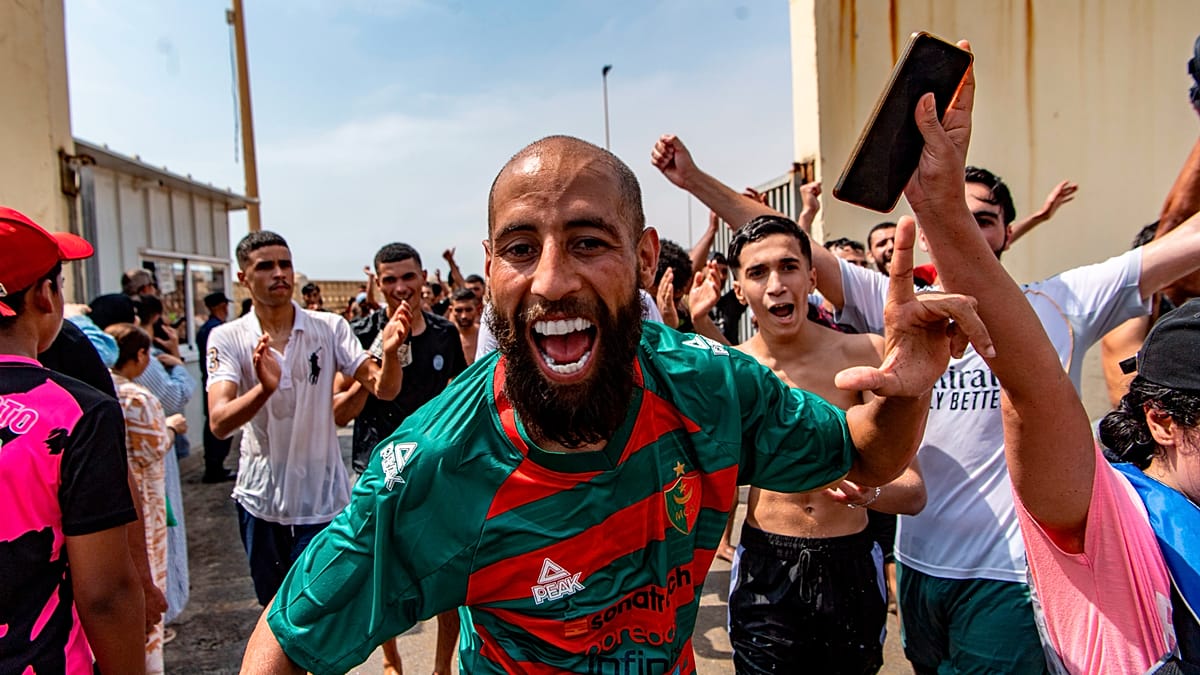
No one expected a city of just 19 square kilometers to become the epicenter of a humanitarian and diplomatic crisis affecting southern Europe. On Thursday, thousands of migrants crossed from Moroccan territory into Ceuta, marking the largest mass crossing since the 2021 crisis. Ceuta officials estimated around 60,000 entries, while Spain's interior ministry reported the death toll reaching 34 by Friday afternoon. Footage from Tarajal beach shows chaos, with large crowds running between the breakwater and roads near the border. Most arrivals were young people, but women with children and entire families were also visible, risking drowning and exhaustion.
Morocco: Sovereignty claims come to the fore
The events have reignited a sensitive issue in Moroccan-Spanish relations: sovereignty over Ceuta and Melilla, which Rabat considers its own territory since independence in 1956. The crisis coincided with Morocco's Throne Day celebrations. Local outlet Hespress wrote that the mass incursions into Ceuta and attempts to cross near Melilla have brought back debate about the social and economic situation in border areas and the cities' connection with Morocco. Hespress quoted Yahya Yahya, head of the committee for reintegration of Ceuta and Melilla, who said the handling by Ceuta authorities revealed "the fragility of the Spanish presence" and that the request to deploy the army amounted to a "political failure."
Algeria: Political point-scoring
Algeria's historical hostility toward Morocco shaped its public reaction. The website Tout sur l'Algerie described the event as a "mass escape of Moroccans" and called Morocco "Europe's spoilt child," arguing it used the "migration bomb" against Madrid. The platform criticized European leaders, particularly Italian Prime Minister Giorgia Meloni, who called for suspending Spain's Schengen membership, and Foreign Minister Antonio Tajani for allegedly courting Morocco. It claimed Moroccan security forces let migrants cross without intervention, implying either inability to control borders or using migration as a weapon. Algerian state television also framed it as a "mass escape" reflecting Morocco's difficult economic conditions. Algeria itself faces youth unemployment around 31% and criticism over suppressing the Hirak protest movement.
On Algerian social media, sarcasm prevailed, with one user dubbing Morocco "Switzerland" and insisting Ceuta is Spanish. Moroccan users responded that Algerians also flee their country's grim reality, while others posted videos of migrants of various nationalities, noting migration drivers extend beyond nationality.
Tunisia: Humor and irony
Tunisian social media users shared videos of the mass crossing, often with humorous comments. One wrote: "Only the king is left," referring to the large number of people who left Morocco in hours. Others saw the footage as revealing deep social and economic crises facing North African youth, with unemployment pushing them to risk their lives. Tunisia's youth unemployment stood at 38% in 2025, and the country itself is a significant source of irregular migration to Europe. President Kais Saied consolidated power in July 2021, dissolved parliament, and adopted a new constitution in 2022, criticized by human rights groups for dismantling revolutionary gains.
Background: Ceuta and Melilla
Spain has two exclaves bordering Morocco: Ceuta and Melilla. Ceuta was captured by the Portuguese in 1415 and passed to Spanish rule in 1668 under the Treaty of Lisbon. Melilla came under Spanish crown in 1497. Both received self-government rights in 1995. Morocco still regards them as occupied territories. Spain built an 8.4-kilometer fence around Ceuta and a 12-kilometer fence around Melilla in the mid-1990s. The 2021 crisis, involving about 8,000 crossings, was widely attributed to a diplomatic row after Spain hosted Western Sahara's Polisario Front leader Brahim Ghali.