Scientists identify gene behind redback spiders' self-sacrificial mating ritual
German researchers crossbreeding Australian redback spiders with New Zealand's katipō have found that the male redback's self-sacrificial "somersault" during sex is linked to a specific spot on the X chromosome. The discovery helps explain why some widow spider species see males eaten after mating while others do not.
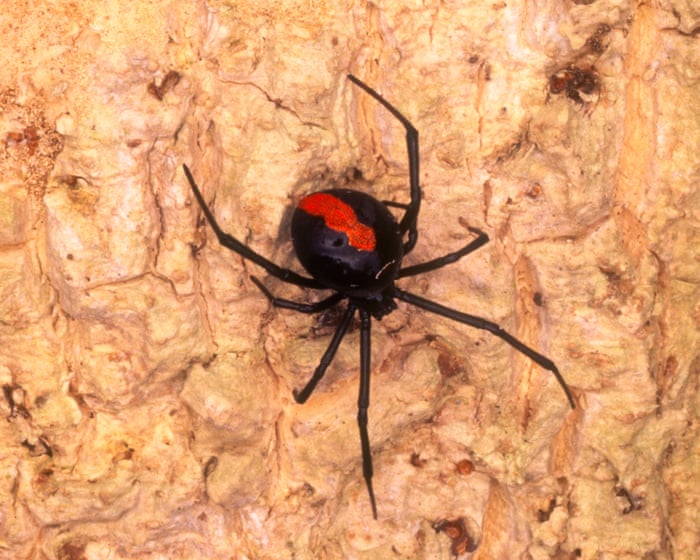
The Australian redback, also known as the Australian black widow, is one of only two monogynous widow spider species, meaning males typically mate with just a single female. During copulation, the male uses his pedipalps to transfer sperm into two storage organs inside the larger female — but he also performs a striking move, flipping his abdomen directly into her jaws.
According to Cor Vink, a spider expert at Lincoln University in New Zealand, the male constricts his abdomen while pumping sperm, making it harder for the female to get a grip and allowing him to survive the first mating. However, in attempting to fertilise the female's second storage organ, he risks being eaten before finishing. Some males avoid this fate by mating with immature females who have not yet developed the habit of consuming partners.
A contrast with a close relative
Redbacks are closely related to New Zealand's katipō, which do not practise sexual cannibalism — the male simply mates and leaves the web. Vink notes this is typical of most widow spider species, making the "widow" label something of a misnomer. Of 31 widow spider species worldwide, self-sacrificial male behaviour is generally only seen in redbacks and brown widows.
In a study published in Biology Letters, German researchers bred female katipō with male redbacks to track how the somersaulting trait was inherited. Nearly half of third-generation offspring still displayed the behaviour, pointing to a link with a specific location on the spider's X chromosome. The researchers noted it was striking that such a complex behaviour could stem from such a simple genetic basis.
Vink has also observed interbreeding between native katipō and invasive redbacks in the wild, raising concern that New Zealand's protected endemic species could be lost through hybridisation. Redbacks and katipō are thought to have diverged roughly 100,000 years ago, meaning the loss of the somersaulting behaviour in katipō happened within that relatively short evolutionary window.