Scientists: Earth's oxygen-rich atmosphere may disappear sooner than expected
Computer modeling by Japanese and US researchers suggests Earth's atmosphere could retain high oxygen levels for roughly another billion years before undergoing rapid deoxygenation, according to a study published in Nature Geoscience.
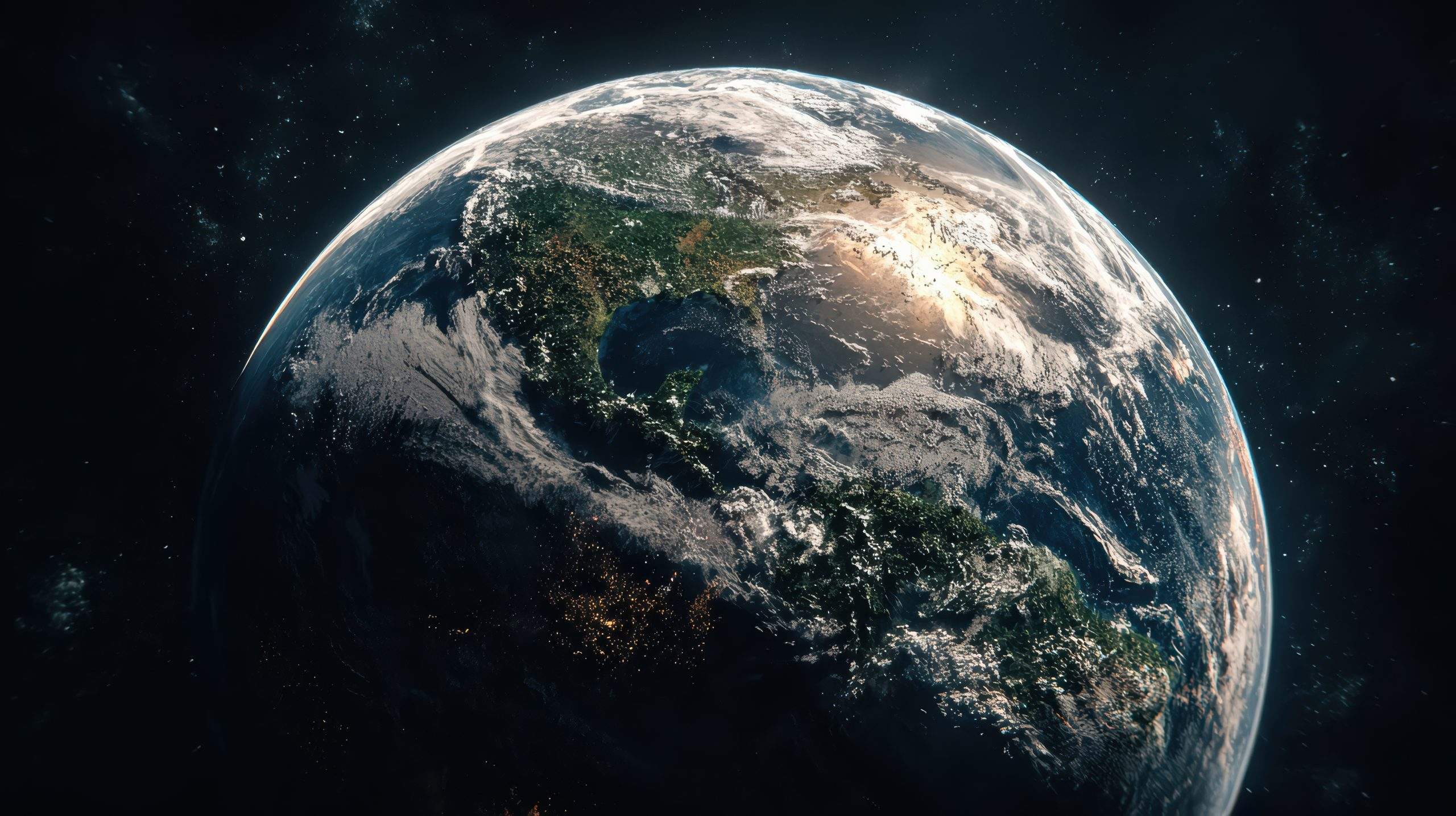
Scientists using advanced computer modeling have attempted to determine how long Earth's atmosphere will continue to sustain high oxygen levels, according to BBC's "Sky at Night Magazine". The findings suggest this process could continue for roughly another billion years.
The model was developed by Kazumi Ozaki, an associate professor at Toho University, and Christopher Reinhard, an associate professor at the Georgia Institute of Technology, taking into account both the planet's climate and its biochemical processes. To achieve a more reliable forecast, more than 400,000 simulations were run, each time varying different model parameters. The study was published in the journal Nature Geoscience.
What happens after a billion years
According to the scientists' calculations, after this period Earth could experience rapid deoxygenation — a sharp decline in atmospheric oxygen levels. As a result, the atmosphere would come to resemble the one that existed before the Great Oxidation Event roughly 2.5 billion years ago.
Ozaki explained that following significant deoxygenation, the atmosphere would be characterized by elevated methane levels, low CO2 levels, and the absence of an ozone layer. Under these conditions, Earth's system would most likely become a world dominated by anaerobic life forms. The researchers stress, however, that the processes that will unfold over the next billion years cannot be predicted with complete certainty.
Among several possible future scenarios that could render Earth uninhabitable — including climate change, rising CO2 levels, an asteroid impact, or gradually increasing solar brightness — the researchers consider the loss of the oxygen-rich atmosphere one of the most likely.
Oxygen's history on Earth
The study is a reminder that the current atmospheric composition, in which oxygen makes up about one-fifth, has not remained constant throughout the planet's history. In its early period, Earth's atmosphere contained very little free oxygen. This changed roughly 2.4 to 2.5 billion years ago during the so-called Great Oxidation Event, when oxygen levels in the atmosphere and oceans rose sharply. Scientists link this to the development of oxygen-producing photosynthesis in microorganisms, which gradually transformed the planet's chemical environment and created the conditions for more complex life forms to evolve.

