The 1926 documentary 'Moana': First film labeled a documentary and its link to Disney's blockbuster
Before Disney's animated and live-action 'Moana', there was a 1926 silent documentary of the same name. It became the first film to be called a documentary and its maker Robert Flaherty may have inspired today's Disney version.
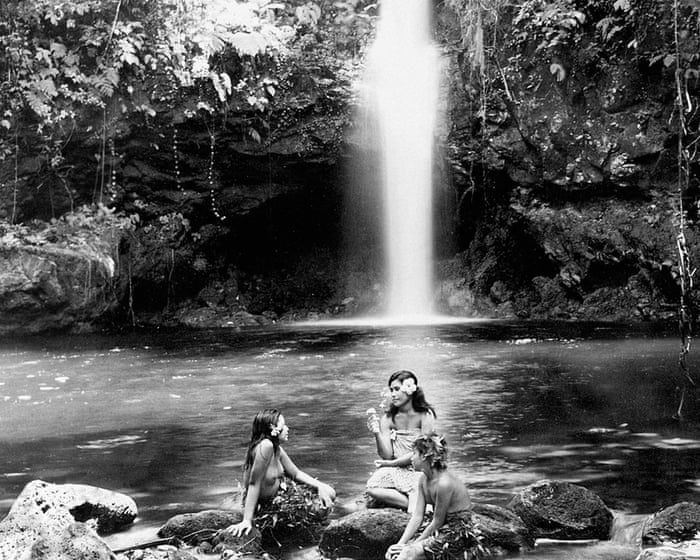
Next week sees the release of Disney's live-action 'Moana', a remake of the 2016 animation hit, again starring Dwayne Johnson. But that was not the original Moana. That honor goes to a film released a full century ago: a glimpse of Polynesian life now largely forgotten but nevertheless offering some inspiration to the makers of today's iteration.
Film historian Bruce Posner believes someone at Disney picked the bones of the 1926 'Moana' to make their movie. The 1926 film was a silent documentary by American filmmaker Robert Flaherty, who had cemented his reputation with 'Nanook of the North', a pioneering portrait of Inuit civilization. For his next feature, Flaherty had carte blanche to go anywhere; he chose Samoa.
Flaherty had envisioned a sea monster story, but upon arrival found no such creature. Instead, he crafted a pastoral picture of Samoan life centered on a young man named Moana and his family. Over a year of groundbreaking on-location filming followed. Flaherty faced challenges with primitive equipment in Samoa's equatorial climate, even setting up a lab in a freshwater cave where he accidentally poisoned himself, spending months near death.
First documentary
Despite breaking box office records at trial screenings in New York, the film flopped on wider release. One reviewer noted: "Instead of entertaining, it interests." However, critic John Grierson stated it had "documentary value," coining the term "documentary." Thus 'Moana' became the first film to be labeled a documentary.
This classification also sparked controversy. Dr. Dionne Fonoti from the National University of Samoa explains that many elements Flaherty depicted were no longer practiced by the 1920s; women appear topless, which contradicted evolving Samoan modesty. Moreover, the film was entirely staged — Moana and his "family" were not related, and Flaherty cast based on appearance and acting ability.
Samoan perspective
Today, Fonoti says the film is not considered controversial in Samoa. Most view it as a snapshot into the past. The daughter of one star said in a 2011 documentary: "In my opinion there was nothing wrong with the film." Another villager from the filming location added: "This film is our film. It belongs to this village." Flaherty's wife Frances, the co-producer, noted how the community was making the film with them, with village elders helping to recreate forgotten traditions.
Link to Disney
Fonoti sees "a significant link" between Flaherty's film and the Disney franchise. Before 'Moana', Disney had drawn on non-western cultures without consultation, causing controversy. For this film, the company assembled experts from across the Pacific Islands to advise. Fonoti has been on the advisory board since the franchise began and says it's been a good experience. "Pacific Islanders have been part of the history of western cinema since the beginning. So to see it evolve to where it is today is amazing."
Posner is convinced the silent film was an inspiration, pointing to the shared Pacific Island setting and title (though the protagonist's gender changed). He hopes the Disney remake brings attention to the original as its centenary approaches. "To me, this film is about beauty, grace and humanness," Posner concludes.


/nginx/o/2026/10/08/17961379t1h774d.png)