Bieszczady farmer grows herd from 7 cattle to 35 suckler cows on meadows alone
Krzysztof Mordes, a former city resident, raises red Angus beef cattle on grasslands and pastures in the Bieszczady mountains of south-eastern Poland. His herd has grown from seven animals to 35 cows, though he is considering scaling it back.
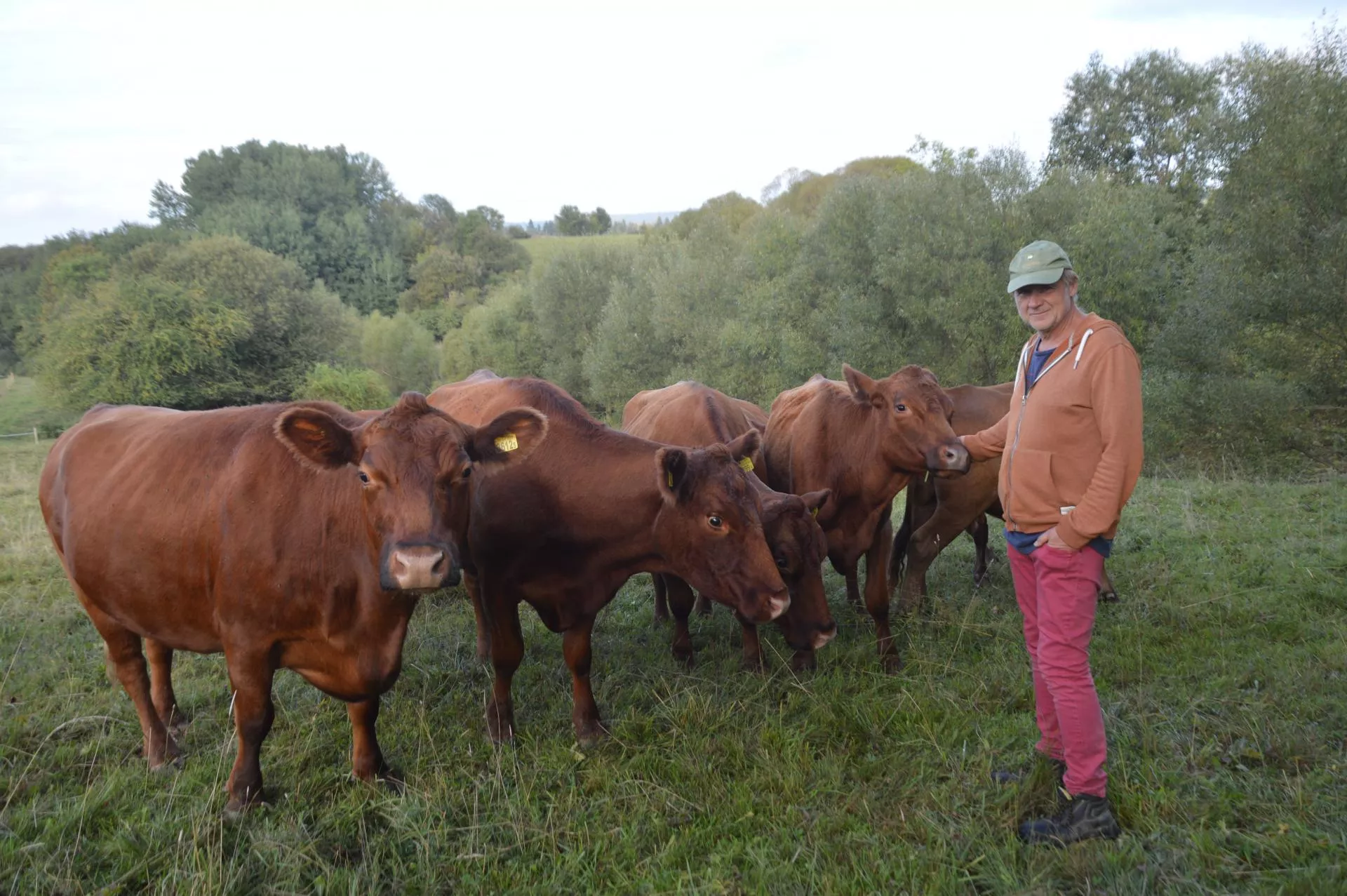
Krzysztof Mordes moved from the city to the Bieszczady mountains in south-eastern Poland, in the Podkarpackie region, where he raises red Angus beef cattle. His farm now has 35 suckler cows, which rear calves and are not milked. He had no family background in farming, yet his experience shows that such a herd can be kept without any arable land, relying only on natural meadows and pastures.
From city to mountains
The Mordes family bought their first animals in December 2013: six cows, one of which arrived with a small heifer. They came from Pomerania in northern Poland, because there were no Angus cattle in the Podkarpackie region at the time. His wife settled in the Bieszczady in 2017, and he followed two years later. He says Welsh Black and Salers were also considered, but there were very few of them in Poland. Angus uses pasture well, copes on poorer land and is regarded as relatively docile. In Poland the breed makes up less than 10% of beef cattle, and most of those are black Angus.
Breeding started with artificial insemination, but success was only around 50%. The following year a bull was brought in, and in the first year all cows were in calf. The farmer says Angus cows suffer no birth losses and calve unaided, unlike heavily muscled breeds such as Piedmontese.
Feed and workload
The farm takes part in environmental programmes that restrict ploughing and reseeding of grassland, so herd size must match the feed base. This season a hectare yielded only about 10 bales. Meadows are cut once a year, usually from 15 June. In summer the animals eat only what they graze; for winter he stores hay and haylage. Grazing ends around 15 October, when calves are separated from their mothers and sold, usually at six to eight months old. The couple do not fatten animals themselves because they grow no grain.
Wolves and future plans
The biggest problem in recent years is wolves, which killed three calves this year. A bear has also visited the farm. The cows defend the herd by gathering together and placing the calves in the middle. Summer brings a great deal of work, so for the next two years the couple plan not to keep heifers as replacements, gradually shrinking the herd.