Former defence procurement chief reveals problems in €81 million body armour deal
Ervīns Kopeika, former head of Latvia's State Defence Logistics and Procurement Centre, has pointed to serious flaws in a body armour procurement that took nearly seven years and cost around €81 million. VALIC itself denies allegations of unlawful competition restriction.
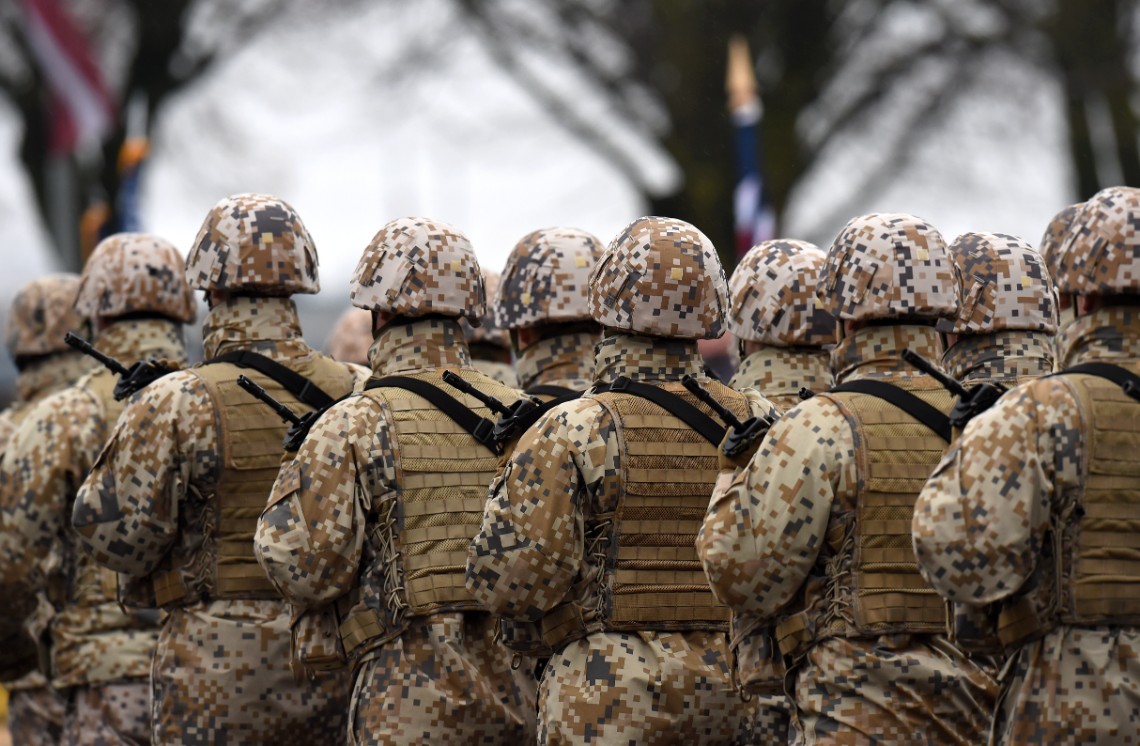
Retired brigadier general Ervīns Kopeika, former head of the State Defence Logistics and Procurement Centre (VALIC), has raised concerns about the procurement of modular combat body armour, which concluded in March 2025.
A seven-year process
The tender was announced in February 2019, but according to Kopeika it effectively began in 2018, while the technical specification was drafted back in 2017. That means the process took roughly seven years, compared with the usual 12–26 months for similar VALIC procurements. Kopeika argues that a specification based on eight-year-old parameters could not account for technological progress made since then, and that the price of a body armour set roughly doubled over that period.
Current VALIC head Alans Andrulis attributes the length to a reorganisation, complaints filed with the Procurement Monitoring Bureau and subsequent litigation, bidders' requests for extended deadlines, and six months of functional testing. VALIC states the technical specification was not changed during the process and complies with NATO STANAG requirements, with functional testing — conducted by an accredited independent institution — playing a major role.
An outdated testing standard
Kopeika notes that in 2023 the United States introduced a new, stricter body armour testing standard, NIJ 0101.07, which Lithuania has since applied in its latest procurements, but which was not used in Latvia's tender.
Suspicions of restricted competition
Kopeika believes the process was deliberately drawn out and that the closed-tender format prevented companies that entered the market later from offering more modern solutions. VALIC denies this, noting that nine companies met the qualification requirements, though ultimately only two submitted offers.
Kopeika also says complaints about restricted competition were received in 2023, and in 2024 he was informed that soldiers' privately purchased vests were more advanced than those offered in the tender. Following an internal investigation he requested, a commission reportedly found deliberate delay, yet the procurement was not halted, and a winner was announced at the end of 2024. The contract is valued at approximately €81 million.
/nginx/o/2026/09/24/17934631t1he63a.jpg)

/nginx/o/2026/09/23/17933400t1hb471.png)