Knight Daniel von Bannerow: Lielvārde's First Feudal Lord
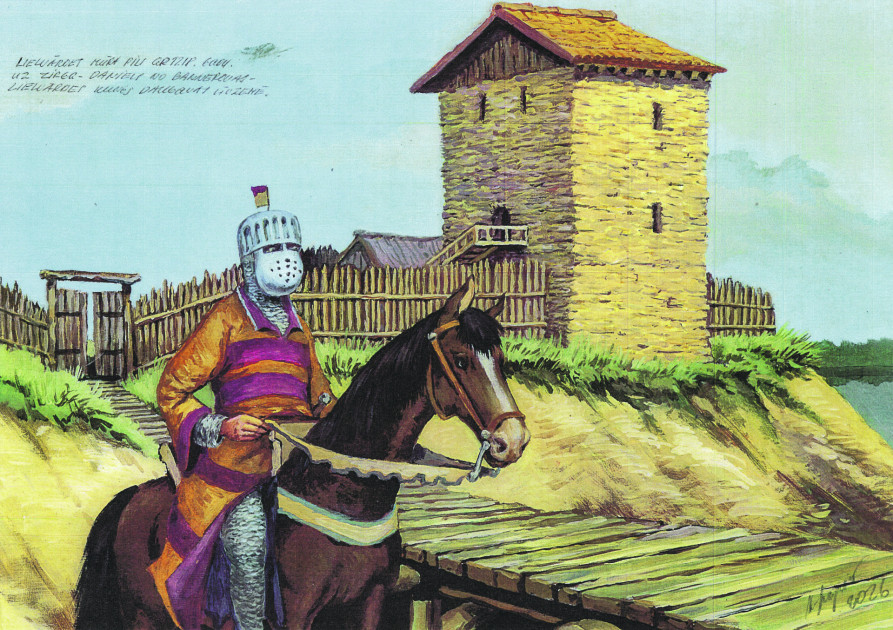
Historians note that the Lielvārde region was the first fief granted to German crusaders in the Baltics, with Knight Daniel von Bannerow likely becoming the first vassal. He received the fief from Bishop Albert in 1201 but could not settle until after the death of local King Uldevene in 1213, when he began building a stone castle. He is mentioned until 1224 and died between 1226 and 1228.
Historical Background
The feudal system, where a vassal received land in exchange for military service, was common in 13th–15th century Europe. Lielvārde, inhabited since the 1st millennium BC, became the first such fief in the Baltic when Bishop Albert granted it to Knight Daniel in 1201.
Origins and Arrival
Daniel likely came from Bannersdorf village on the island of Fehmarn (modern Germany). As a younger son without inheritance, he bought weapons and a horse (or ox) and sought fortune in the Crusades. He probably arrived in Livonia around 1200 with Bishop Albert, initially staying in Ikšķile.
Conflicts and Settlement
After receiving the fief, Daniel could not settle in Lielvārde as it was controlled by King Uldevene. In 1205, Bishop Albert led a campaign against the Daugava Livonians, ravaging Ikšķile, Lielvārde, and Aizkraukle. On the return, a battle near Meme village (modern Lielvārde Culture House area) forced the Livonians to submit. Daniel then settled in Dievukalns, across the Rumbiņa River.
In 1206, a Livonian uprising near Salaspils failed; the people of Lielvārde agreed to convert and pay tribute, but later defaulted. In 1207, a Lithuanian army still sought permission from Uldevene, not Daniel, to cross the Daugava.
In 1212, Daniel treacherously captured Livonian elders, thwarting a rebellion. In 1213, Lithuanians destroyed the wooden fort and killed King Uldevene, clearing the way for Daniel.
Construction of Lielvārde Castle
Once in power, Daniel began building a stone castle no earlier than 1214–1215. The first structure was a square tower (internal dimensions 5.84 x 5.84 m, walls 1.75 m thick) built of limestone and fieldstones with clay mortar. It had three floors: a treasury, a great hall, and living quarters. The tower was surrounded by a wooden palisade, later replaced by a stone wall. The tower remains visible in the castle ruins today.
Final Mentions and Death
Daniel is last recorded in 1224 as a witness to the Treaty of Tālava. He died before Bishop Albert (17 January 1229), likely between 1226 and 1228, at age 45–50, a respectable age for the 13th century.
Literary Legacy
Knight Daniel is one of the few historical figures mentioned in Andrejs Pumpurs' epic "Lāčplēsis", where he is portrayed as a brutal but jovial warrior.