Security spending in Estonia may affect water and heating tariffs
Estonian water and heating companies are planning investments in cybersecurity, drone defence and infrastructure protection. The Competition Authority says assessing such costs for tariffs is difficult.
Security costs in Estonia may be reflected in household bills for water, heat and electricity. According to ERR, Estonia's public broadcaster, heating companies are considering laying pipelines underground or developing counter-drone systems, while water utilities are focusing on cybersecurity. Assessing such spending is a difficult task for the Competition Authority, which reviews the justification for tariffs.
About 300 critical companies
Estonia has around 300 companies for which it is especially important to keep operating during a crisis or war. They include water, heat, electricity and gas suppliers. Russia's actions across the border affect the work of these companies.
Aare Palmsalu, head of AS Rakvere Vesi, told ERR that water utilities are currently concentrating mainly on cybersecurity, although some have already bought helmets and body armour. Investments to reduce the impact of power outages have been made for years: backup generators, action plans and fuel reserves. Their cost is already included in the water price. Turning pumping stations into true "sarcophagi" has not begun, and it is unclear whether it will, as its usefulness is uncertain.
Vadim Nogtev, development manager at heating company SW Energia, which operates almost 60 district heating networks, said the company has so far focused on preventing disruptions to electricity, communications and water supply. He said it will probably soon have to deal with counter-drone measures and physical protection, but what this looks like in practice is unclear. In his view, countering drones should be handled by those with the right skills, for instance the Defence Forces, who could map vital facilities and help repel drone attacks.
Oversight and tariffs
Companies largely decide for themselves which investments they need. The State Chancellery told ERR that oversight of water and heating companies lies with cities and rural municipalities. The Competition Authority acts similarly when a company wants to include security investments in water or heat tariffs.
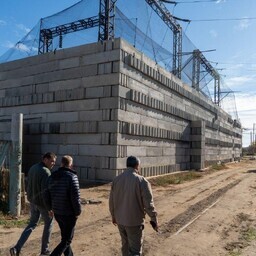
The authority's head, Evelin Pärn-Lee, said that if a company can justify security costs convincingly enough, they will be allowed in the tariff. She gave an example: the authority cannot itself judge whether a substation is better enclosed in a concrete sarcophagus or simply surrounded with concrete blocks, though the cost difference is likely real.
Pärn-Lee said she is more concerned about water, gas and heating companies that are not preparing for a crisis or war at all. In her impression, some Estonian providers of vital services have not yet reached the stage of imagining what investments are needed to ensure supply if the security situation worsens.