Estonian National Museum in Tartu opens interwar silver exhibition
The Estonian National Museum in Tartu opened an exhibition on Friday, November 6, on Estonian goldsmiths and silverwork made between 1918 and 1944. It is the most comprehensive overview to date of the period's makers and their work.
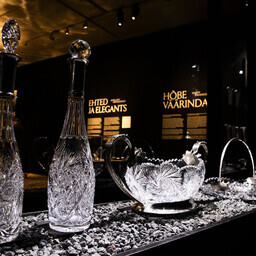
The Estonian National Museum (ERM) in Tartu opened the exhibition "Estonian Silver Between the Wars: Well-Known and Lesser-Known Silversmiths, 1918–1944" on Friday, November 6. It presents the goldsmithing trade in Estonia from the founding of the independent state in 1918 to 1944, and can be seen in the museum's gallery until August 29, 2027.
More than 400 goldsmiths worked in Estonia during this period. Some were master craftsmen who owned their own businesses and workshops, while others were artisans fulfilling orders for larger companies. The exhibition shows their craftsmanship, aesthetic sense and creative diversity.
Silver in everyday objects
Maris Klaas, head of content at ERM, said that in the young, newly independent country an extraordinarily wide range of objects had to be made of silver. She suggested this was partly a feature of those early years: even the prize for every milking competition was made of silver.
Exhibition curator Riina Reinvelt said that today goldsmiths are associated mainly with jewelry, but back then they produced a huge variety of everyday items. She was surprised by how many objects featured scenes of Estonia: cigar boxes, spoon handles and shot glasses were engraved with views of Tartu, Tallinn, Narva, Viljandi and other towns.
Research and open questions
The exhibition followed several years of research, during which thousands of archival records were examined and objects in various collections were studied.
The assay office's archives were destroyed in 1944, so it was not known which maker's mark belonged to whom. Reinvelt said an object bearing every known maker's mark has not been found; none turned up in museum or private collections. She also followed the online marketplace osta.ee, and some items were bought there for the museum's collection precisely because they carried a mark for which no examples had previously been found. She expects more discoveries to emerge.