Former Tartu industrial area by the railway station could become a district of homes and offices
The Estonian city of Tartu has started a detailed plan for a four-hectare former industrial site near its main railway station. It envisions offices, commercial space and apartments, while the Tartu Mill business keeps operating.
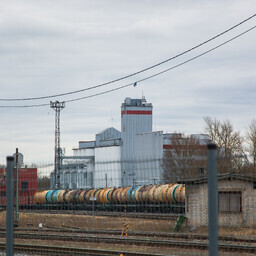
The city government of Tartu, in southern Estonia, has initiated a detailed plan for a four-hectare former industrial site close to the city's main railway station. The aim is a mixed-use redevelopment with offices, commercial space and apartments. The site lies at Lembitu 1b and Väike kaar 41 and 41b, behind the Lembitu Coop supermarket and next to the railway.
The area also contains the operations of Tartu Mill. Deputy Mayor Kertu Vuks (Reform Party) said the goal is to gradually move industrial activity out of the area and make room for new development. According to her, Tartu Mill will keep operating, but a different kind of development is planned around it, giving the former railway infrastructure and warehouse sites a new character.
What the plan allows
The current plan would permit office and commercial buildings alongside apartment buildings, which could make up as much as 40 percent of the development. Buildings would generally have three to six stories, and up to 10 percent of the site could have buildings of eight stories. A preliminary design is expected within six months.
A strategic environmental assessment will not be required, but noise mitigation measures will be needed because of the site's proximity to the railway, Vuks said.
Other projects in central Tartu
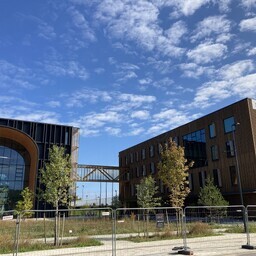
The proposal is one of several redevelopment plans for central Tartu and its surroundings. New residential and commercial districts are planned or under way at the site of the Zeppelin shopping center and a former district heating plant, while the neighboring Port Athena development is well on its way to completion.
Kaisa Hiire, Southern Estonia regional manager for real estate firm Domus Kinnisvara, said the market is ready for more centrally located housing, including not only small units for students but also larger apartments for families. She said families want to live where they can use nearby infrastructure and services without hassle, such as shops, cafes, libraries, schools and kindergartens. Hiire nevertheless does not expect the newest developments to significantly affect average property prices across the Tartu region.