Midsummer Cheese and Traditions: From Ancient Times to Today
The article explores the history, symbolism, and EU protection of Jāņu siers (Midsummer cheese), as well as herb-gathering customs and Midsummer celebrations in Ogre through different eras.
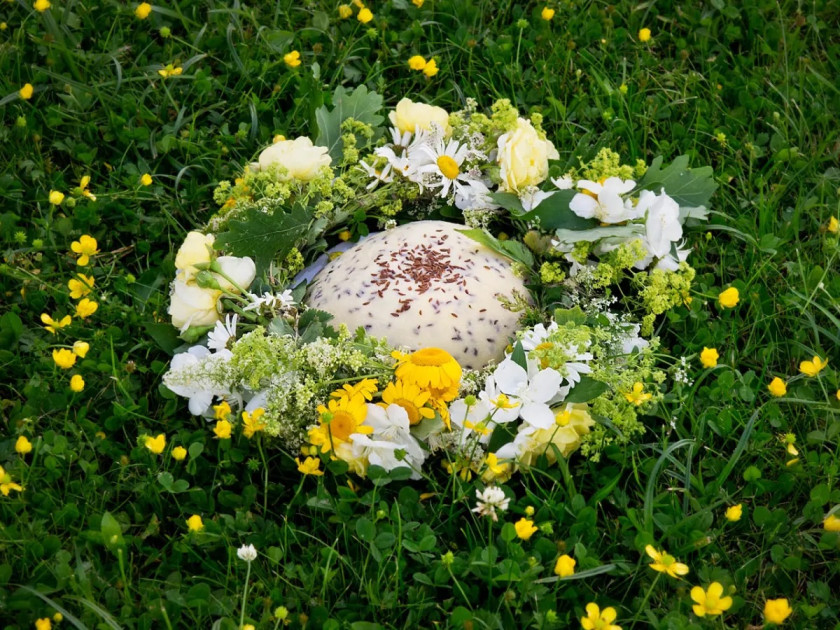
Since 2016, Jāņu siers (Midsummer cheese) has been protected by the European Union as a "Traditional Speciality Guaranteed." Only producers registered under this scheme may use the name "Jāņu siers" for commercial sale. The cheese is made from fresh curd, milk, eggs, butter or cream, caraway seeds, and salt – a recipe unchanged for centuries. The first detailed instructions date back to 1852, written by farmer Kārlis Lepevičs.
The round shape of the cheese symbolizes the sun disc, its yellow color and caraway seeds resemble sun rays. A large cheese wheel signified generosity and wishes for prosperity. The cheese is an essential part of Midsummer (Jāņi) celebrations.
Equally important is the tradition of gathering 27 herbs (trejdeviņi) for wreaths and bouquets. Specific plants are associated with different groups: gentle flowers like poppy and tansy for girls, stinging nettles and thistles for boys, and valerian (baldurjānis) is often mentioned as the starting herb.
Historical records from Ogre describe grand Midsummer festivities. In 1938, the local guard (aizsargi) organized a large event on the beach featuring Rūdolfs Blaumanis' play "Skroderdienas Silmačos," fireworks, and music in the light of bonfires and spotlights. In 1958, the play "Trīnes grēki" was performed. However, in 1980, an official criticized the organization on Ogre island, citing long queues, poor music and lighting, and lack of traditional Līgo songs.
During the Soviet era, Jāņi were officially banned; in 1950, they were removed from the list of holidays. Despite restrictions, people continued celebrating privately, preserving the traditions. Today, Jāņu siers remains not only a festive dish but also a symbol of Latvian identity, representing traditions at home and abroad.