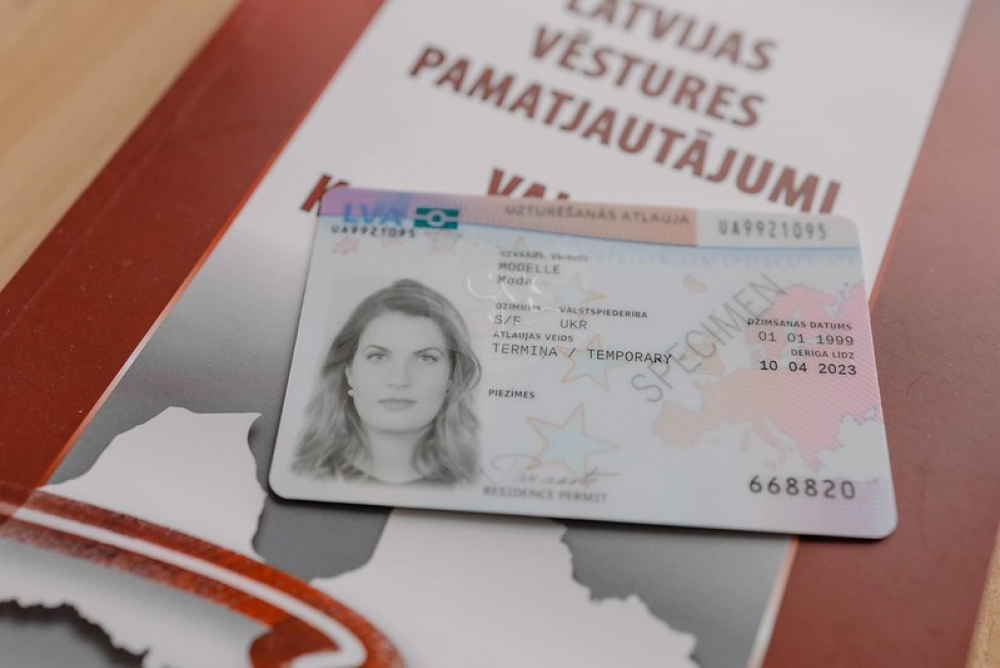
Latvia's new Immigration Law: eight more changes foreigners and their hosts should know
Latvia's new Immigration Law took effect on September 15, introducing stricter language requirements, an integration program and a unified permanent residence status. The law was re-passed by parliament in August after the President sent it back for reconsideration.
Latvia's new Immigration Law entered into force on September 15, 2026, after the Saeima passed it a second time in August following the President's earlier decision to send it back for reconsideration in June. The main objection concerned insufficient restrictions in the investment-based temporary residence permit program, and this gap has now been addressed.
Stricter language rules
Previously, certain documents could be submitted in Latvian, English, Russian, French or German. Now, documents needed for crossing the border, obtaining a visa, or a first temporary residence permit may be submitted in Latvian or English, while documents for a repeat or permanent residence permit must be submitted in Latvian only. Hosts inviting a foreigner must provide all information solely in Latvian.
Other notable changes
A state fee will now apply when appealing a visa refusal, cancellation or annulment decision, though it will be refunded if the appeal succeeds. A new early integration program has also been introduced: foreigners whose temporary residence permits total at least 18 months will need to complete a course on Latvian culture and history and reach A1-level Latvian, with certain exceptions. This obligation takes effect on December 31, 2027, and the foreigner must cover the cost themselves.
The law merges Latvia's two previous permanent residence statuses into one, based on the EU long-term resident status, retaining the five-year residence and A2 language requirements while adding the culture and history course.
The self-employed person and individual merchant residence permit programs have been discontinued, with no new applications accepted on those grounds. The startup program has become more accessible, as restrictions now apply only to citizens of countries subject to additional Cabinet-mandated checks.
Foreign students from non-NATO countries studying full-time in bachelor's or master's programs will no longer be able to obtain residence permits for family members, though this restriction does not apply to doctoral students. The deadline for hosts to notify the Office of Citizenship and Migration Affairs about changed circumstances has also been extended from three to five working days.
/nginx/o/2026/09/14/17918313t1hca7d.jpg)