Why June 17, 1940 Became the Day of Latvia's Occupation?
The article explains that the Soviet occupation of the Baltic states was driven by the international situation: the Molotov-Ribbentrop Pact, the Winter War, and Germany's attack on France, which diverted Western attention.
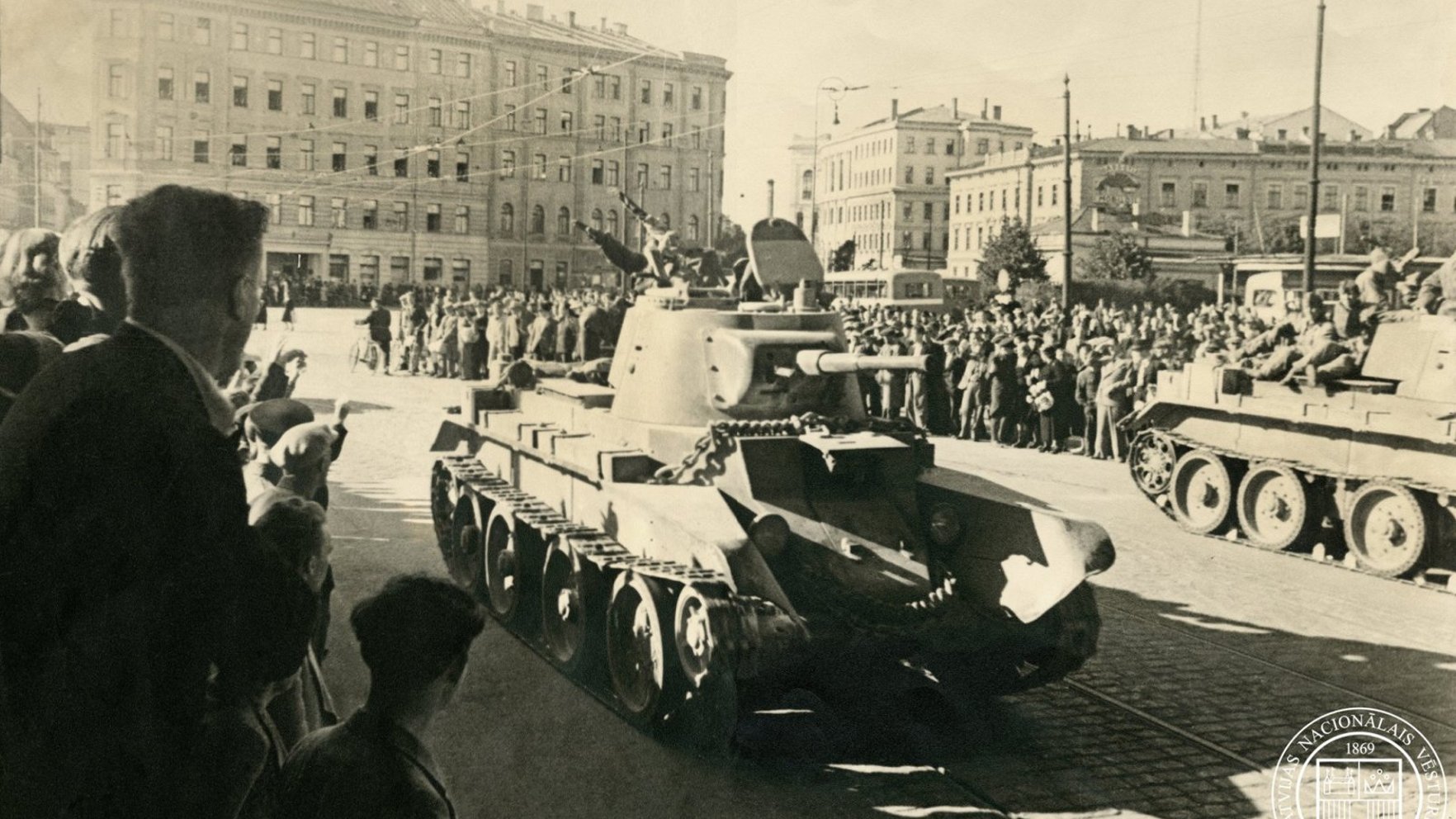
The occupation of Latvia on June 17, 1940, was not an isolated event but the culmination of a longer process. The secret protocol of the Molotov-Ribbentrop Pact, signed on August 23, 1939, placed the Baltic states within the Soviet sphere of influence. After Germany invaded Poland on September 1 and the USSR followed on September 17, the Soviet Union forced mutual assistance pacts upon the Baltic states.
Latvia signed such a pact on October 5, 1939, under duress, allowing Moscow to station approximately 25,000 Soviet troops on its territory, though the actual number including naval units and support personnel was higher. Initially, Stalin likely lacked a detailed plan for immediate sovietization. Latvian President Kārlis Ulmanis and Foreign Minister Vilhelms Munters hoped that by faithfully fulfilling the pact, they could weather the storm and maintain independence.
However, the international landscape shifted in spring 1940. The end of the Winter War freed Moscow's hands, while Germany's blitzkrieg against Western Europe in May and June diverted global attention from the Baltic. France's military collapse and the West's inability to influence events in Eastern Europe created favorable conditions for Stalin. He seized this opportunity to proceed with full occupation. The date of June 17 was chosen because it was soon enough after France's fall that the Western powers were still unable to react.

/nginx/o/2026/05/23/17657052t1h380f.jpg)