Why Public Transport Seats Are Bright and Busy: The Reason Is Practical
The bold patterns on bus, tram and train seats are not merely a matter of designers' taste. They help hide dirt and wear, while the durable fabric lets the seats last longer.
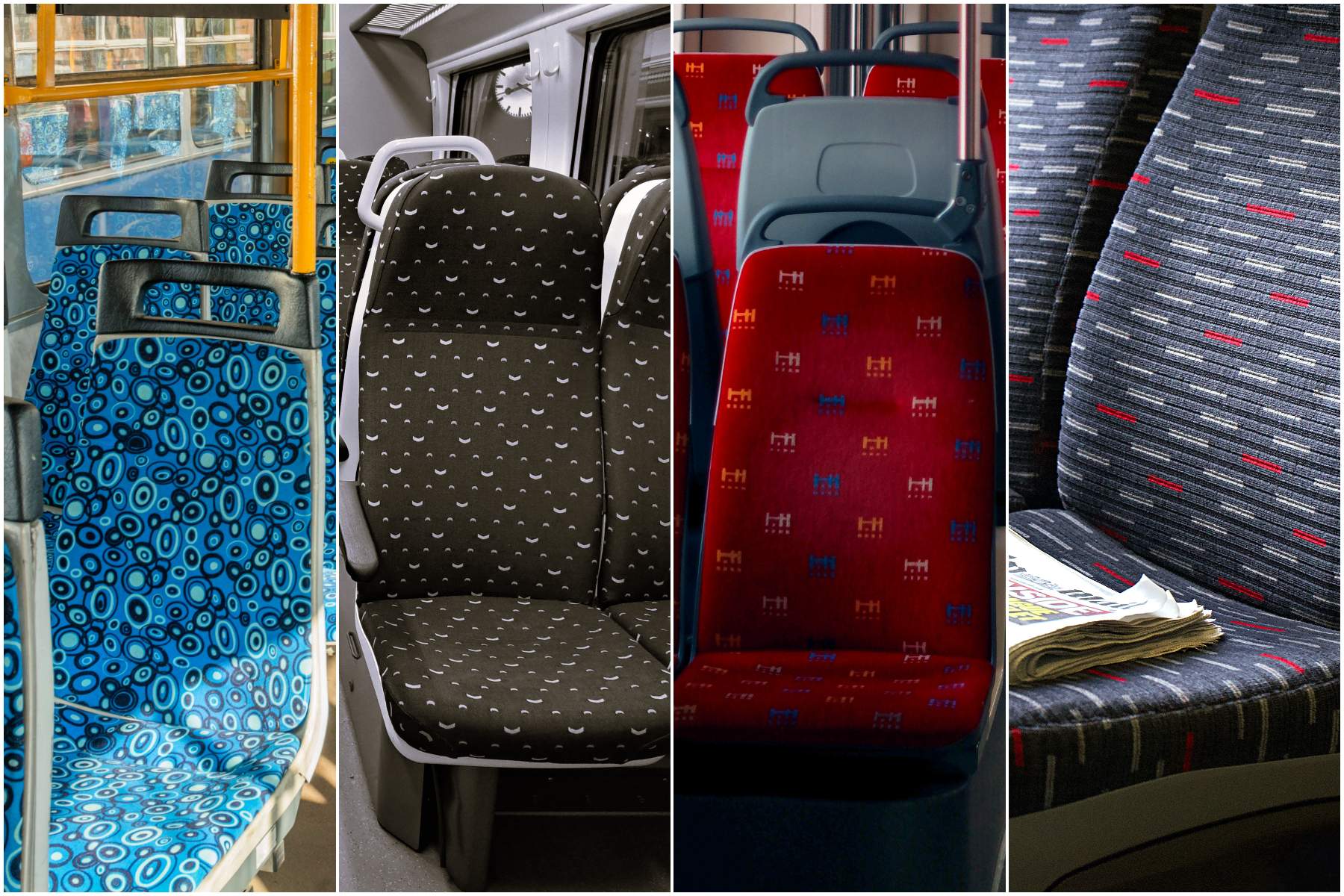
Anyone who regularly rides public transport has probably noticed that bus, tram and train seats are often strikingly colourful, combining bright colours, intricate geometric shapes and assorted patterns. The look is not accidental: there is a practical explanation tied both to the heavy daily use seats endure and to the material they are made from. The Latvian daily Latvijas Avīze reports this, citing foreign press materials.
Daily wear
Seats in public transport are used intensively every day. Passengers sit in them on both short and long journeys, and minor mishaps are common: drinks get spilled, food drops, and dirt and signs of wear are left on the fabric.
On plain, especially light-coloured fabric, such stains and damage would be visible immediately. Complex patterns and vivid colours visually mask them, so the seats look clean and tidy for longer, even under heavy use.
The fabric matters too
Public transport widely uses a special fabric called moquette. It is a dense, pile fabric that can be made using the jacquard weaving technique. This method makes it possible to create intricate patterns by interweaving threads of different colours.
Moquette can consist of 85% wool and 15% nylon. This combination provides resistance to everyday wear, and the material can also be produced in large quantities.
Conclusion
The bold patterns and unusual colours are therefore not just a question of designers' taste. They help conceal the traces of daily use, while the durable fabric allows the seats to last longer. What passengers sometimes find odd-looking design is in fact a carefully considered practical solution.