Constitution Day in Ukraine: A Fundamental Law Often Ignored
Ukraine officially celebrates eleven state holidays. This Sunday marks Constitution Day, described as the most peculiar one. The article analyzes Ukraine's persistent disregard for its Constitution, exacerbated by war, reflecting public attitudes and a crisis of rule of law.
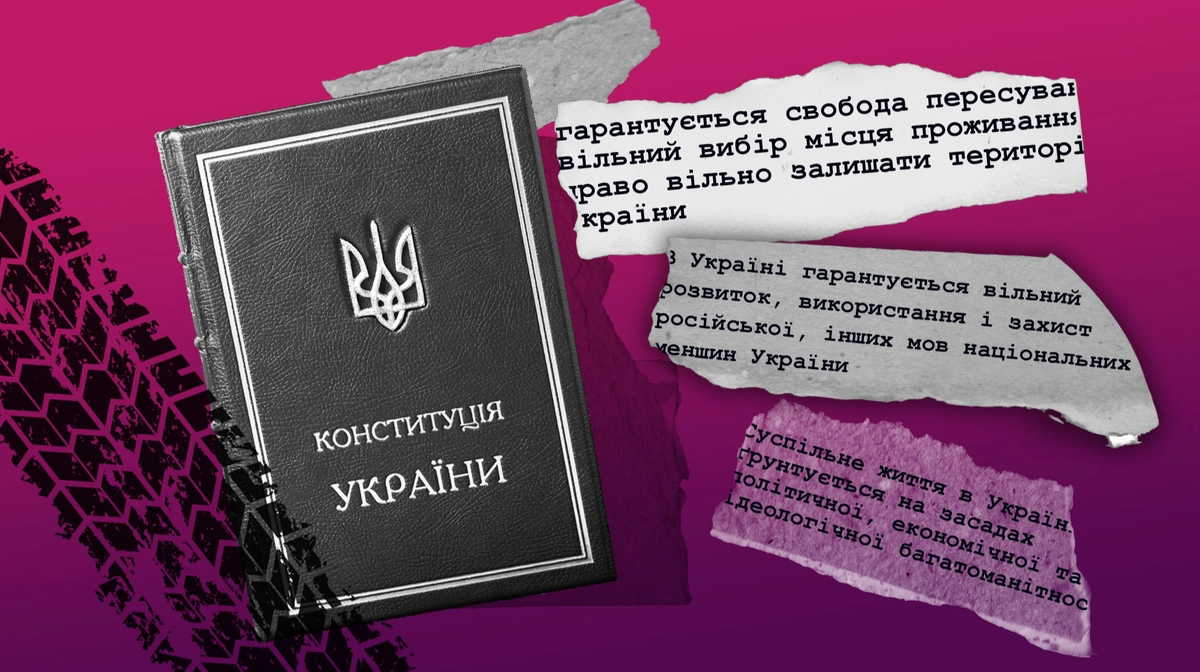
Ukraine has eleven official state holidays. This Sunday, the country will celebrate one of the most controversial – Constitution Day. The fundamental law has never been perceived as a true and indisputable legal act.
In the 20th century, Ukrainians lived for decades under fake constitutions: the USSR Constitution of 1936, the Ukrainian SSR Constitution of 1937, the USSR Constitution of 1977, and the Ukrainian SSR Constitution of 1978. All of them accustomed citizens to the idea that the basic law serves a purely decorative function and is weakly connected to real life.
When the Constitution of independent Ukraine was adopted in 1996, many approached it similarly – as a beautiful ornament that can be ignored when practical necessity arises. Long before the full-scale war, the fundamental law was often disregarded: in 2010, Viktor Yanukovych staged a constitutional coup, expanding his powers; in 2014, Yanukovych's removal was hastily legalized; in 2017, Petro Poroshenko stripped citizenship from Mikheil Saakashvili; in 2019, Volodymyr Zelensky and his team introduced the so-called "turbo mode."
After February 24, 2022, the constitution began to be considered even less. Military necessity takes precedence over political principles. In summer 2022, 79% of surveyed Ukrainians believed the president could interfere in parliament and government, violating the principle of separation of powers. Currently, 52% still consider this unconstitutional practice justified.
Constitutional norms regarding language rights are also ignored. Article 10 guarantees the free development of Russian and other minority languages; during war, Russian has officially become the "enemy language," and city council decisions on language moratoriums override the constitution. Article 24 prohibits discrimination, yet public hate speech against those speaking other languages is widespread. The Kyiv bookstore "Sens" even crossed out inconvenient fragments from the constitution and gifted edited copies to customers.
Article 15 guarantees ideological diversity and prohibits censorship – the war encourages ideological consolidation and uniform thinking. The role of state ideologists and censors is effectively played by the Ukrainian Institute of National Memory with expanded functions.
Even when the constitution allows tough measures, it is bypassed. Article 33 permits restricting the right to leave the country "by law" – yet the border closure for men has been regulated for five years by a Cabinet resolution and internal instructions, not by law.
Article 64 states that during war, certain rights may be limited, but some (like Articles 28, 29) cannot be. In practice, these nuances interest mainly lawyers. Many believe that war justifies any restriction.
The author warns: chronic disregard for the rule of law leads to the perception that rules are for the weak. When the war ends, Ukraine will need to find a new modus vivendi, and the decorative 1996 Constitution is unlikely to help.