Kremlin rhetoric: Putin frames the Ukraine war as a dispute over European security order
Over the past six months, Kremlin propaganda has increasingly argued that the war is not only about Ukraine but about Russia's place in Europe and a revision of the security architecture. Think tanks see this as an attempt to secure new spheres of influence, pointing to possible talks involving the US and China.
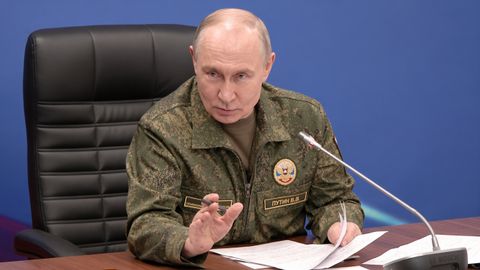
Russian President Vladimir Putin has, over the past six months, increasingly insisted that the war in Ukraine is only part of a wider confrontation over Europe's security order and Russia's "national interests". Latvian outlet Apollo.lv reported this on 17 November 2026, citing assessments from several international think tanks. This matters because such framing allows Moscow to demand far more than territory, including a new security arrangement in Europe.
From Ukraine to all of Europe
Earlier, when discussing how to end the war, the Kremlin focused on Ukraine itself: it demanded the Donbas region, a change of government in Kyiv and a neutral status for Ukraine. Now Putin describes Ukraine as a minor element in a global clash of civilizations. The Polish think tank Defence24 explains that if the war is presented as a dispute over Russia's place in Europe, the Kremlin can demand much more than land.
In his Valdai Forum speech in early October, Putin blamed the West and NATO, claiming they used Ukraine in a struggle against Russia. The source describes these statements as unsupported by facts.
The idea of Yalta 2.0
US President Donald Trump has said a "broad, beautiful agreement on Europe" was reached with Russia. Possible three-way talks with Chinese President Xi Jinping are also mentioned. Euronews notes that such talks, like the 1945 Yalta Conference, where Stalin, Roosevelt and Churchill divided postwar Europe into spheres of influence, could end in a deal struck without allies. In the outlet's view, this would weaken NATO and transatlantic ties.
"Historical lands"
The think tank Atlantic Council warns that claims to "historical lands" could put Europe's borders in question. Modern international law rejects the idea that a state may claim territory merely because it once controlled it. In 1914 the Russian Empire covered territories now belonging to at least 15 countries.
Jan Kallberg of the Center for European Policy Analysis urges European leaders to act proactively, including by supporting Ukraine. The Carnegie Endowment for International Peace notes that the confrontation Putin has created with Europe will remain his legacy.