Hybrid wind farm under construction in Latvia stirs discontent in Estonia
Utilitas Wind is building a hybrid wind farm with 18 turbines and battery storage in Latvia near the Estonian border. Residents and officials in a neighbouring Estonian parish object to the traffic burden and environmental risks.
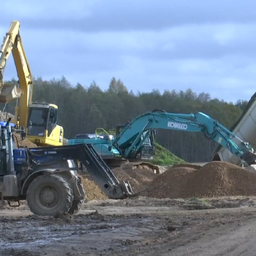
A wind farm known as Lode, under construction on the Estonian-Latvian border, has become a source of cross-border dispute. The Estonian energy group Utilitas, through its subsidiary Utilitas Wind, is building a hybrid park in Latvia consisting of 18 wind turbines and battery storage. Some Estonian villages fall within the project's main impact zone, and local authorities and residents have raised objections.
The project and its goals
The project costs 200 million euros. The park will be able to cover the annual electricity needs of 110,000 households, and the batteries will provide four hours of storage. Utilitas head Priit Koit said the site was chosen mainly because a grid connection was available. The park will be linked to the third interconnection between Estonia and Latvia, so power can flow to either country depending on where consumption is higher.
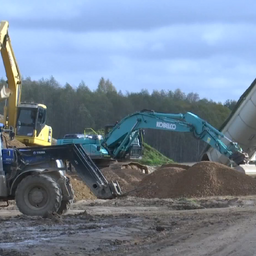
Earthworks are under way near the village of Arakste, the first foundations have been laid and the equipment has already been ordered. The first electricity is expected in a year, and the park should be fully operational in the first half of 2028. Utilitas also plans to erect four more turbines on the Estonian side in the future.
Objections from the Estonian parish
Mulgi Parish tried to challenge the construction in a Latvian court but was unsuccessful. The main complaints concern the strain on infrastructure and environmental risks. Sand and gravel for the site are brought from Estonia, so around a hundred heavy trucks pass through the quiet village of Penuja every day. A road originally intended for tourism development is now used as a construction route.
Imre Jagomäe, the elder of Mulgi Parish, says the concentration of such infrastructure in the region has become excessive: besides this site, wind farms are planned in eight more locations in the parish, as well as in neighbouring Saarde Parish and in Latvia's Ipiķi.
The Latvian side's arguments
Einārs Cilinskis, Parliamentary Secretary at Latvia's Ministry of Climate and Energy, pointed to the project's financial benefits. According to him, the local municipality and residents will receive up to 300,000 euros a year in compensation, allowing the region to feel a direct economic benefit from energy development.