Literature in wartime: words do not stop when the bombing begins
Under the conditions of war, literature becomes more than a victim: it is a tool of survival, resistance, and witness, as shown in Ukraine, Sudan, Myanmar, and Gaza.
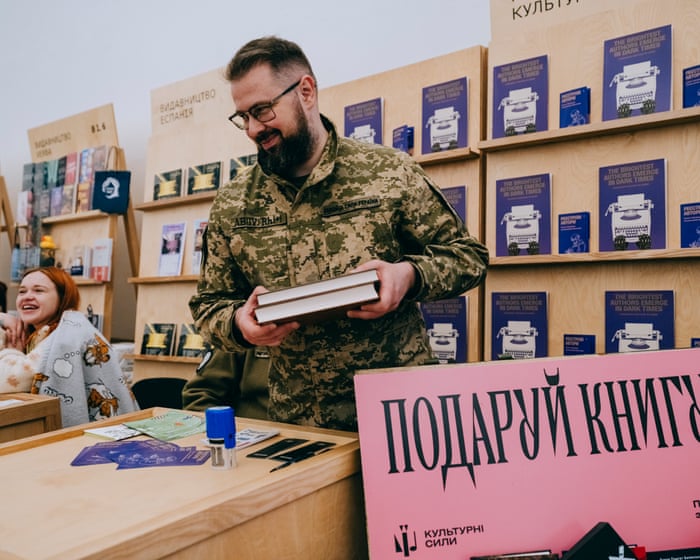
Last week, thousands of readers gathered at a literary festival in Kyiv, risking air raids to hear from writers. Four brutal years of war have not destroyed the appetite for writing but fueled it.
Russia's extensive and systematic attempts to destroy Ukrainian culture and identity have rightly received widespread attention. Over 700 libraries were damaged or destroyed within the first three years of the full-scale invasion. However, that campaign has also spurred efforts to move away from Russian literature and Russian-language titles that previously dominated the market. Ukrainian literature and publishing has flourished far beyond the powerful documentary accounts of war, with growing room for experimentation. Newer writing also attempts to bridge the gap between those on the frontline and those more safely at home.
War tries to destroy culture because culture sustains identity and memory. Literature is not only a victim of war but an instrument of survival, resistance, witnessing – and, sometimes, welcome refuge. When civil war broke out in Sudan in 2023, one resident of Nyala in Darfur concluded that the best thing he could do for his suffering neighbors was to open his own library to replace those closed or destroyed, allowing them to escape an oppressive reality.
Historian Andrew Pettegree noted that bombing, looting, deliberate destruction form the dominant narrative when people write about books in wartime, yet books are both victims and protagonists. Franklin D Roosevelt put it more crudely in 1942: "books are weapons" – though not always brandished for the better.
In Myanmar, poets and other writers have been among those targeted by the regime in its brutal war. Poetry has long played an important role in politics there, including the anti-colonial struggle against the British. When Aung San Suu Kyi's National League for Democracy won a landslide victory in the 2015 elections, 11 poets were among its lawmakers. The previously anti-war poet Maung Saungkha was one of many young writers to take up the gun following the military's 2022 coup. His journey is documented in a recent book, "Frontline Poets: The Literary Rebels Taking on Myanmar's Military".
Israeli strikes killed at least 45 artists, writers and cultural activists within the first four months of war in Gaza, including the poets Saleem al-Naffar, Refaat Alareer and Hibu Abu Nada. Yet the Lebanese-American translator and academic Huda Fakhreddine has said: "It is shameful that we only allow Palestinians space on the page when they are dead or being slaughtered." Gaza had one of the highest literacy rates worldwide and a rich literary heritage, as well as eight universities, before the war.
Poems written by the hungry and desperate, in crumbling ruins, can reach out to readers thousands of miles away. Poetry bears witness to "what cameras cannot reach and numbers can never explain," noted Nazmi al-Masri, professor of languages at the Islamic University of Gaza. But it also demands that there must be more, daring to imagine a future, perhaps even justice, for those now faced with destruction.


