Rock Found in Mali Desert Turns Out to Be Fragment of Ancient Martian Crust
An 800-gram rock found in the Mali desert is a Martian meteorite and one of the oldest samples of Mars's crust ever to reach Earth. Scientists have nicknamed it the “Rosetta Stone of Mars”.
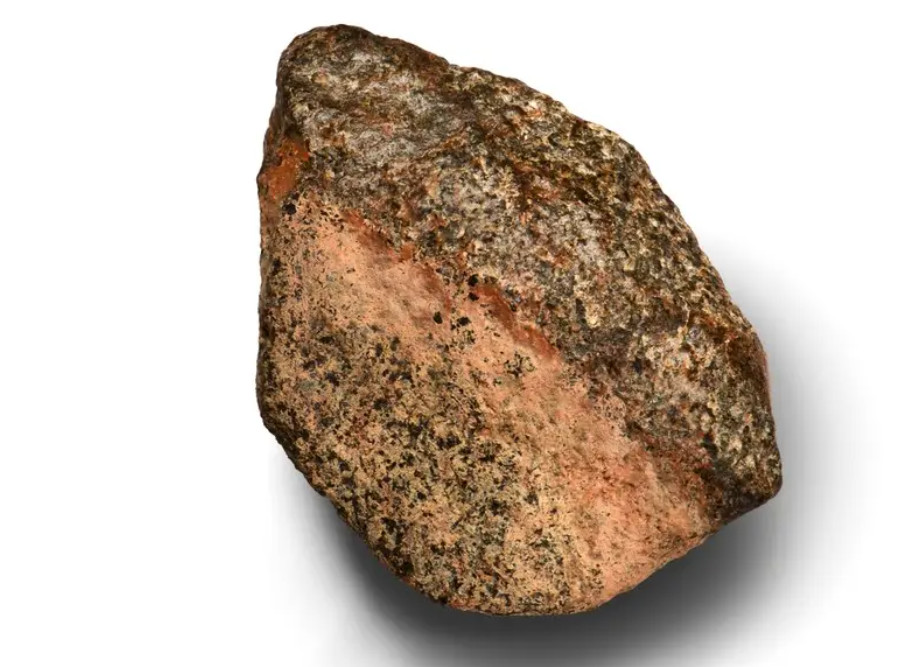
A plain-looking 800-gram rock found in the Mali desert in Africa has turned out to be a meteorite from Mars. According to the portal Futura, citing a NASA study, it is among the oldest samples of Martian crust ever to arrive on Earth. The find gives researchers a way to study the planet's ancient crust and early history, including the role of water.
The study was carried out by scientists from the University of New Mexico and NASA's Jet Propulsion Laboratory (JPL). They compared the rock's oxygen isotope composition with that of other meteorites that came from Mars, and the results matched fully. The rock's mineral and chemical makeup also support its origin. Volcanic minerals containing zircon are consistent with data gathered by the Mars Reconnaissance Orbiter spacecraft while surveying the southern highlands of Mars.
Until now, scientists knew of only 435 meteorites from Mars that had reached Earth. They form when powerful asteroid impacts hurl rock fragments off the planet's surface.
What the analysis shows
Precise dating, which used a tiny piece of the rock, indicates that around 4.1 billion years ago water altered its structure. The geological formation itself may be even older. The researchers call the find the “Rosetta Stone of Mars” because it allows them to study ancient crust in areas of the planet that have not been explored before.
The rock's mineral composition links the meteorite to the southern highlands of Mars. However, the exact place from which it was ejected into space, and the circumstances in which it ended up in the Mali desert, remain unknown.
The meteorite offers only indirect clues about the origin of Martian rocks, but the research team, led by Jana Liu of JPL, hopes to apply the same dating method to other samples. That would help scientists better understand Mars's early history and the situation with water on the planet.