Hunting Tardigrades: First Steps to Sequence Genomes of All Earth's Life
Scientists at the Wellcome Sanger Institute are hunting tardigrades in moss and lichen as the first step in an ambitious project to sequence the genomes of all life on Earth. Using advanced sequencing technology, they aim to uncover tardigrade superpowers and their potential applications in medicine and biotechnology.
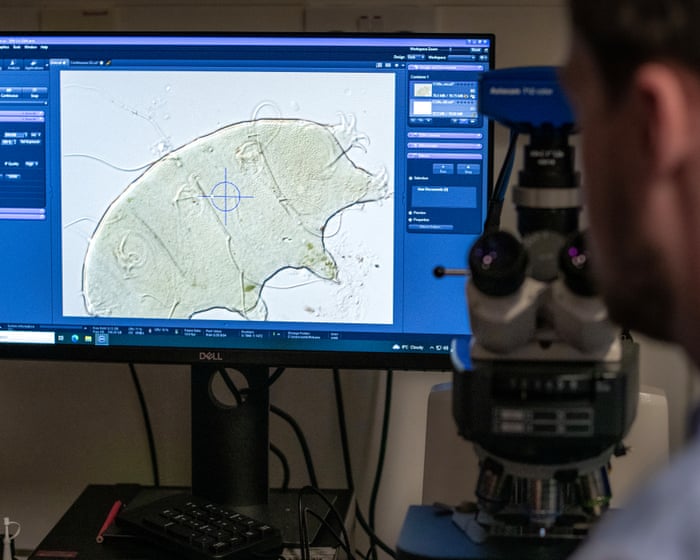
Tardigrade Hunting in Cambridge
On the Cambridgeshire campus of the Wellcome Sanger Institute, postdoctoral researcher Witek Morek carefully examines an old brick-and-flint wall to collect moss and lichen. He is a tardigrade hunter – the first step in a gargantuan scientific undertaking: to sequence the genomes of all life on Earth. Accompanied by Prof Mark Blaxter, head of the Tree of Life programme, Morek collects samples from a walnut tree and returns to the lab.
Advances in Genome Sequencing
In 1998, a millimeter-long nematode worm became the first animal to have its whole genome sequenced; the human genome followed just five years later. Now, thanks to technological advances, the Tree of Life programme sequences 48 genomes per week and has processed 2,600 genomes so far – from whales to fungi, focusing on British and Irish species.
Tardigrades, also known as moss piglets, are famous for their indestructibility – surviving extreme heat, cold, and even outer space. Their genomes are 30 times smaller than the human genome, making sequencing easier. Morek extracts DNA from a single tardigrade using a new protocol that amplifies the genetic material.
Scientific Significance
Sequencing tardigrade genomes helps scientists understand evolutionary relationships and explore tardigrade superpowers – resistance to freezing, oxygen deprivation, and desiccation. These traits could lead to new medicines, dry vaccines, or drought-resistant crops. Blaxter notes that this approach to genome sequencing opens the door to studying all life on Earth.
Invertebrate of the Year 2026
Last year, the tardigrade won the Guardian invertebrate of the year contest, and the competition is now open for 2026. Readers are invited to nominate their favorite spineless creature.