When the Ability to Smell Goes Away: A Window into Brain Health
Smell disorders, affecting up to 22% of the population, are linked to numerous neurological conditions including Parkinson's and Alzheimer's. The COVID-19 pandemic spurred new research highlighting the connection between olfaction and brain health.
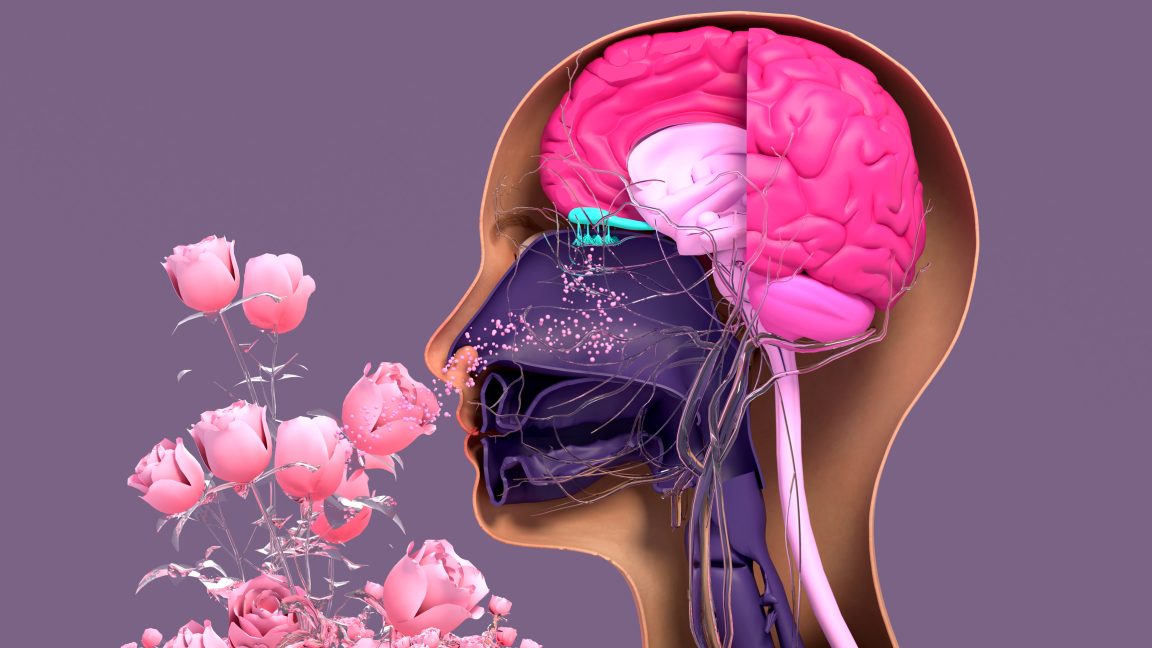
About 14 years ago, Chrissi Kelly lost her sense of smell after a viral infection. Diagnosed with anosmia (complete smell loss), she was told to live with it, but the loss was devastating. Researchers estimate that up to 22% of people experience smell impairments such as hyposmia (partial loss) or anosmia. Others suffer from phantosmia (phantom smells) or parosmia (pleasant smells become unpleasant). Yet these conditions have been underdiagnosed and often dismissed.
The COVID-19 pandemic changed that. With 780 million reported cases globally, smell loss became a recognized symptom. A 2023 survey in Laryngoscope found that 60% of COVID patients experienced smell loss, most temporarily but some long-term. This mass phenomenon reignited scientific interest in olfaction.
The Underappreciated Sense
In the 19th century, French researcher Paul Broca labeled olfaction "the bestial sense," claiming humans traded sharp smell for intellect. Modern research disproves this. Smell enriches life, bonds parents and children, warns of dangers, and anchors emotional memory. Unlike vision or hearing, olfactory signals bypass the thalamus and go directly to brain areas for emotion (amygdala) and memory (hippocampus). The olfactory bulbs are among the few brain regions that generate new neurons in adults, yet they are also vulnerable entry points for viruses, bacteria, and toxins.
Causes of Smell Loss
Some lose smell for unknown reasons. Others after viruses attack olfactory support cells; if cells regenerate (4–6 weeks), smell returns. Head trauma, allergies, and sinus infections can also cause loss. For some, like Kelly, damage is permanent. Smell loss can be an early sign of neurodegenerative diseases. Dave, a wine lover from the Midwest U.S., lost his smell 20 years ago; doctors found nothing, but later he was diagnosed with Parkinson's. Scientists suspect toxic proteins that damage the substantia nigra may first accumulate in the olfactory bulbs, making smell loss an early Parkinson's marker. Smell disorders are also linked to Alzheimer's, Lewy body dementia, depression, schizophrenia, and autism. Researchers have associated smell loss with 139 neurological, physical, and congenital conditions.
Can Smell Be Restored?
Olfactory training is like physical therapy for smell. Patients sniff familiar scents (lemon, rose, clove, eucalyptus) twice daily, focusing on recognition and memory. The goal is to stimulate receptor cell regeneration and neuroplasticity. Zara Patel at Stanford ran the first U.S. randomized trial: 35 patients with smell loss for over a year were split into two groups. After six months, 6 of 19 in the training group showed significant improvement vs. 2 of 16 controls. Other studies found up to 50% improvement when training was combined with steroid nasal rinses. A 2024 meta-analysis of 36 studies confirmed a significant positive impact. Patel notes training isn't guaranteed but is simple and cheap. Early evidence also suggests olfactory training may improve depression symptoms and cognitive function, including verbal fluency and working memory in older adults.