Employee couldn't reach work after storm closed roads — employer disagrees, labour inspectorate explains rights
After the powerful storm of August 22 shut down roads with fallen trees, a reader named Evita could not get to work and her employer refused to accept it as a valid excuse. Latvia's State Labour Inspectorate explains when such absences are legally justified.
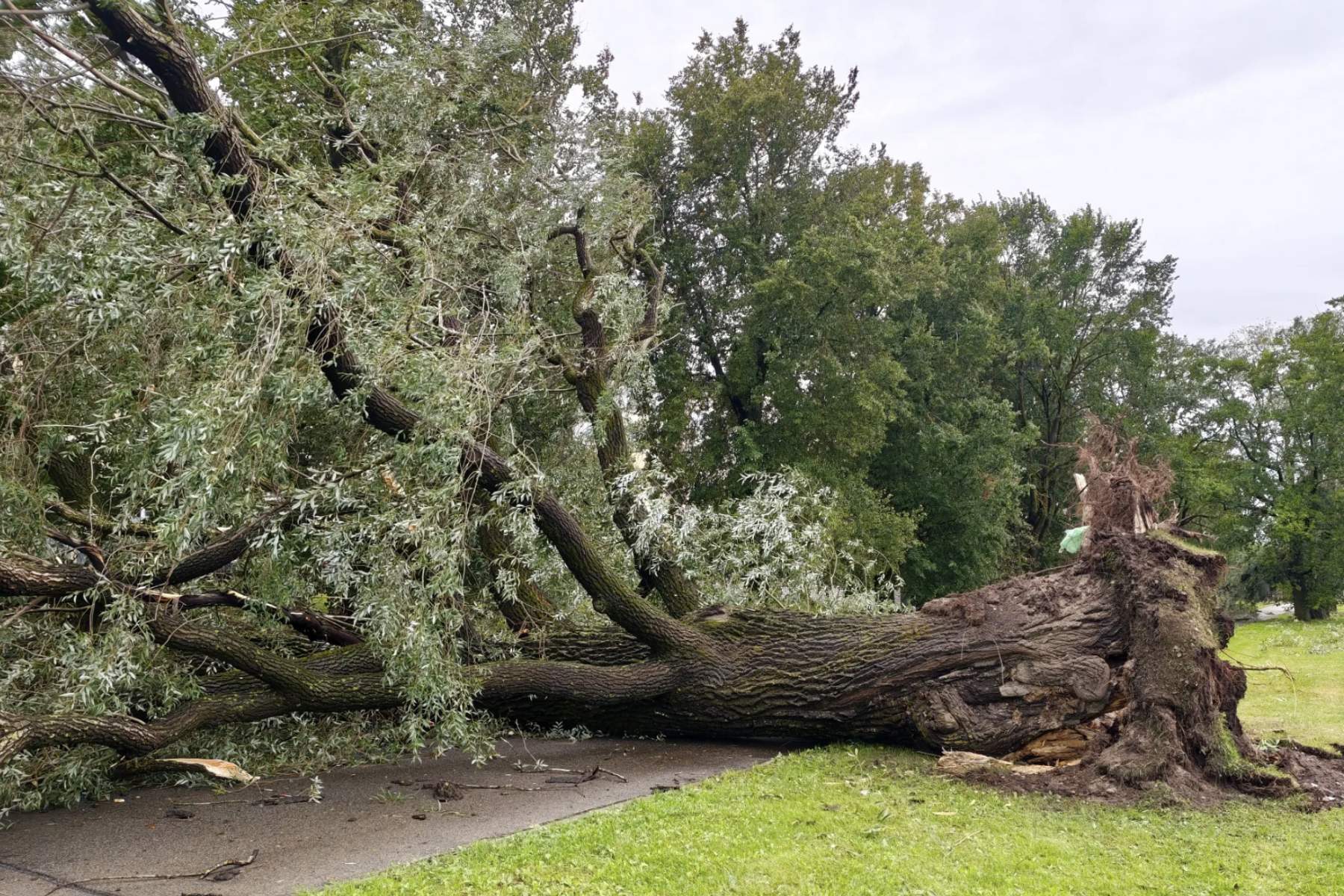
A severe storm hit Latvia on August 22, with gusts exceeding 30 metres per second in places, felling trees, damaging power lines and cutting electricity to nearly 277,000 customers of Sadales tīkls. Beyond the immediate damage, the storm also disrupted ordinary routines — for some people, the road to work was simply closed the following Monday morning.
One such case involves a reader named Evita, who contacted LA.LV after a dispute with her employer. She explained that on Monday morning she could not reach her workplace because trees had fallen across the road and public transport was also delayed. She informed her employer promptly, but was told that getting to work on time remained her own responsibility regardless of the circumstances.
What the law says
According to Laura Akmentiņa, a leading legal consultant at the State Labour Inspectorate (VDI), Article 147 of the Labour Law is relevant here, granting employees the right to short-term absence when their presence at work is impossible due to force majeure or other extraordinary circumstances. However, a storm occurring somewhere does not automatically excuse every absence — what matters is whether its specific consequences, such as closed roads or halted public transport, genuinely made it impossible to reach work.
If such circumstances are confirmed and the employee notified the employer in time, the absence cannot be treated as a violation, nor can it serve as grounds for dismissal. Still, VDI notes that the law does not obligate employers to pay wages for this unworked time, unless more favourable terms are set out in an employment contract, collective agreement or internal rules. Justifiably missed hours generally do not need to be made up later, though employers and employees may agree to shift working hours or allow remote work instead.
Employees must notify promptly
VDI stresses that employees must inform their employer as soon as it becomes clear they cannot reach work, using any reasonable means of communication, and should keep evidence such as notices of road closures. Minor traffic delays or simply poor weather alone are usually not sufficient grounds for absence — what counts is whether reaching work was objectively impossible without risking one's safety. Each case must be assessed individually, and VDI urges both employers and employees to act reasonably and communicate during such extraordinary situations.
/nginx/o/2026/08/19/17858842t1h4ab9.jpg)