Polish farm expands hull-less pumpkin seed growing, working with other farmers
The EKOROL farm in southern Poland has grown hull-less pumpkins for seed since 2009 and works with other farmers. Last season, harvests under this cooperation covered about 250 hectares.
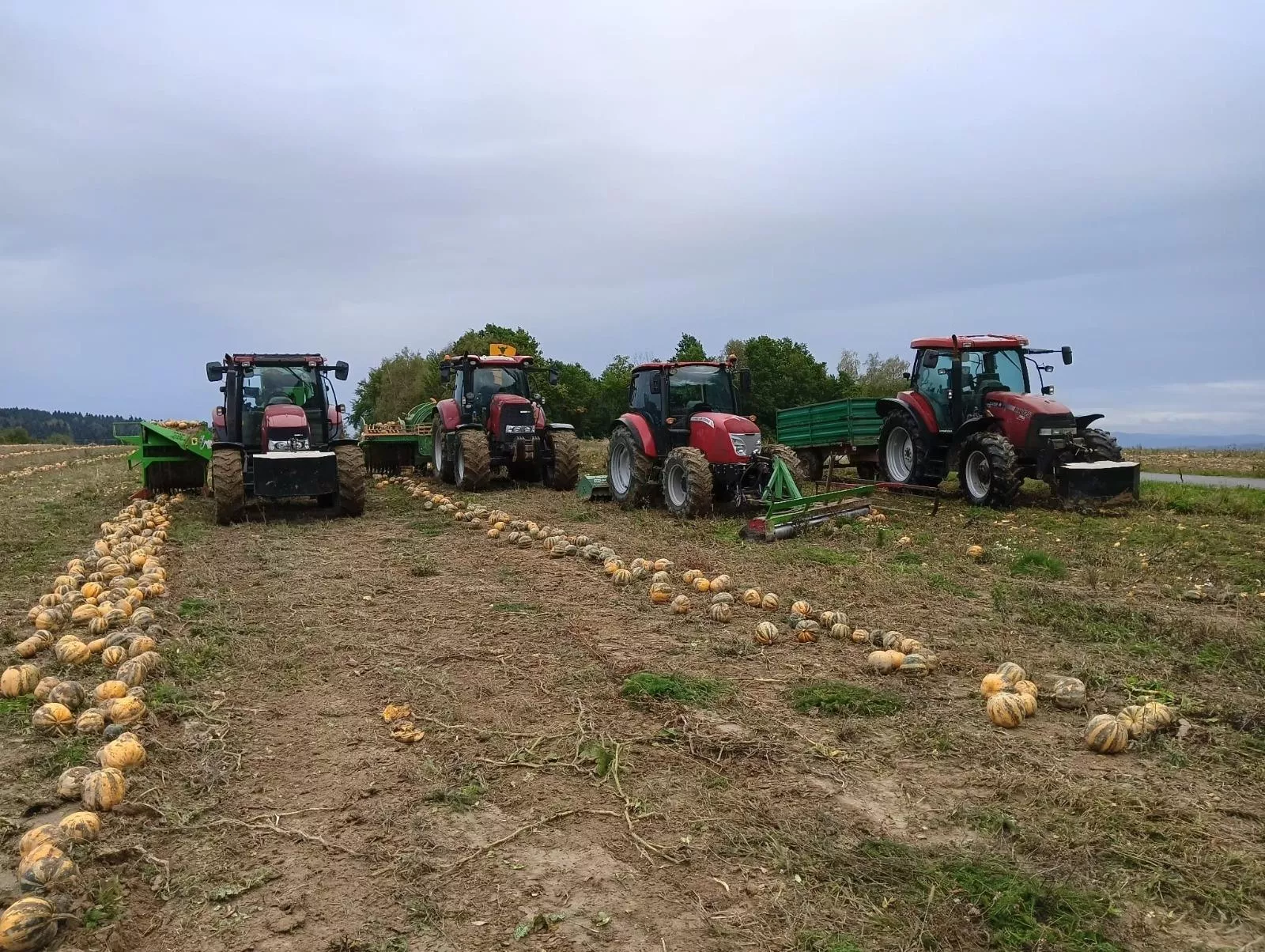
Polish agricultural outlet topagrar.pl profiles EKOROL, a horticultural farm from Rzepiennik Suchy in southern Poland that has specialised in hull-less (seed) pumpkins since 2009. Farmers can consider this niche crop as an alternative to traditional ones while looking for new sources of income.
Farm owner Daniel Żyrkowski explains that seeds of hull-less varieties lack the hard white shell. After washing, drying and cleaning, they can be used without hulling. The seeds go to oil producers, bakeries and food packaging companies. Most of the output is exported to Austria, Slovenia, Croatia and Germany, while some stays in Polish processing and retail.
Cooperation with growers
EKOROL also runs its own oil mill and produces oilseeds. The company imports sowing material from Austria, supplies it to partner growers, advises on cultivation, organises the harvest and then buys the dried seeds. The cooperation mainly covers the Lublin and Subcarpathian voivodeships but reaches other Polish regions too. Last season, harvests under the cooperation covered about 250 hectares.
Yields and costs
The owner says traditional open-pollinated varieties can yield 600–800 kg of dry seed per hectare, and hybrids 800–1,200 kg. These figures are not guaranteed. Seed of non-hybrid varieties costs about 400–450 zlotys per hectare, hybrids about 1,050–1,300 zlotys. He puts a full harvesting and preparation service at around 3 zlotys per kilogram.
Quality strongly affects price: lower-quality seeds fetch about 9 zlotys per kilogram, well-prepared ones about 12 zlotys.
Main difficulties
The biggest challenge is weed control, because no plant protection products are registered in Poland for this crop, so mechanical weeding is used. Soil pH of about 6.5–6.7 and crop rotation also matter. Żyrkowski stresses that the whole process must be planned, from choosing a variety to selling the seeds.