Director Paweł Pawlikowski: the Cold War world felt clearer than today's reality
Polish director Paweł Pawlikowski, whose film "Fatherland" about writer Thomas Mann is opening in cinemas worldwide, discusses the making of the film and parallels between postwar and present-day Europe.
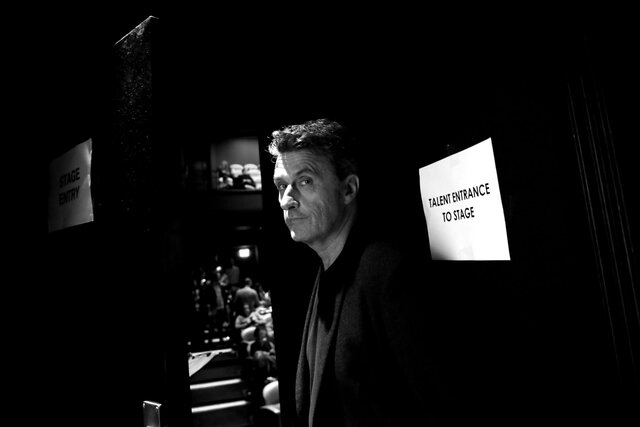
Polish film director Paweł Pawlikowski is releasing "Fatherland" in theaters worldwide. The film, which won the best director prize at the Cannes Film Festival and is Poland's entry for the Oscars, follows German writer Thomas Mann on a journey through postwar Germany. Critics have drawn comparisons between Europe in the 1940s and Europe today, so journalist Anton Dolin of the outlet Meduza asked the director about the similarities and differences.
From "Ida" to "Fatherland"
Pawlikowski denies deliberately planning a trilogy about postwar Europe after "Ida" (2013) and "Cold War" (2018). "Ida" emerged when he was tired of trying to make "normal movies": black-and-white images, static shots and a small budget proved helpful constraints. It was then that he began working with cinematographer Łukasz Żal, and they have kept the same approach since.
This is the first time the director's work is based on real people and events. He chose a single episode, Mann's trip to Germany in 1949, and condensed it into five days, drawing on the writer's diaries, letters and his driver's memoirs. He stresses that the film is neither a reconstruction nor a biopic and treats the facts only as a framework for the screenplay. As an example he cites the suicide of Mann's son Klaus: his father was in Stockholm at the time and did not attend the funeral, and the director says he tried to convey the emotional truth of that situation.
The Cold War and today
Pawlikowski admits that today's world seems too complicated to him and feels like science fiction. He grew up during the Cold War in Soviet-controlled Poland, when the West symbolized freedom and the Soviet Union meant subjugation. He says Putin's Russia did not consciously influence the film, although Russians, especially emigrants, find it relatable.
The film was shot in Poland because it was easier to find or build the ruins needed. Casting extras took especially long, since the director did not want anyone on screen who looked like a person from today.