SpaceX catches Starship upper stage with mechanical "chopstick" arms for the first time
The upper stage of SpaceX's Starship rocket system returned to Earth on Saturday and was caught between two mechanical arms, a first for a spacecraft. The company's booster recovery attempt, however, failed.
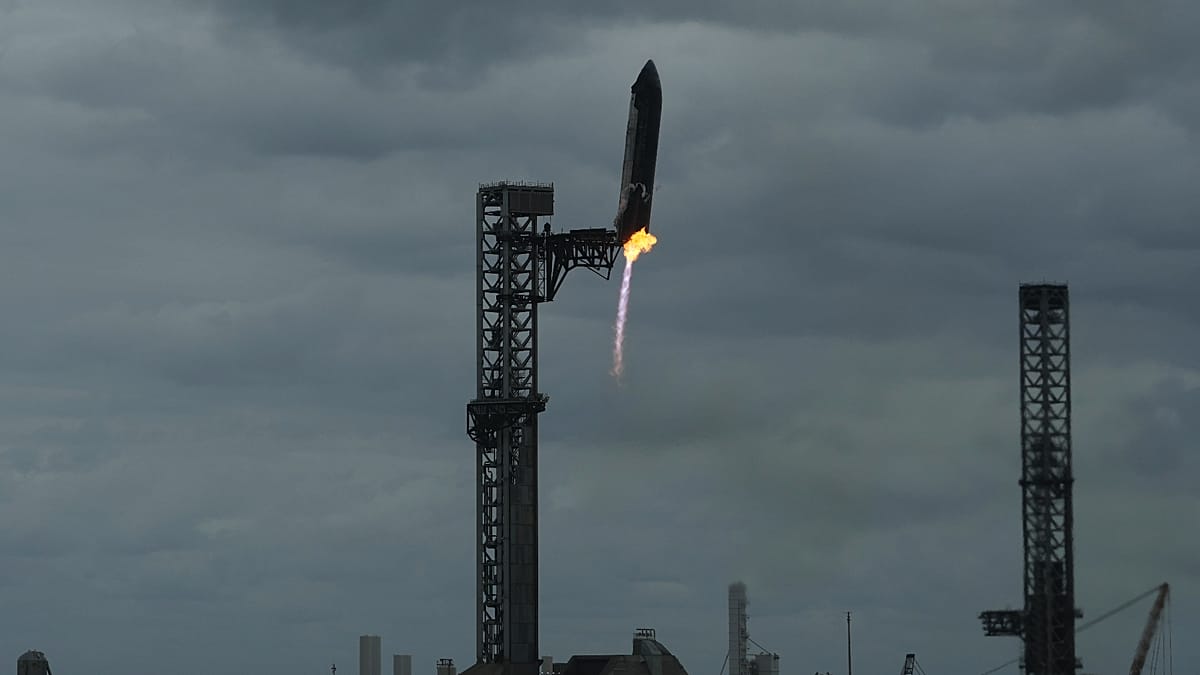
The upper stage of Starship, the rocket system built by US space company SpaceX, returned to Earth on Saturday and was caught between two mechanical "chopstick" arms. It is the first time a spacecraft has been caught this way. The technology matters because spacecraft have so far been single-use, which makes each launch especially expensive.
Starship lifted off on Friday from the company's Starbase facility in Texas. It orbited Earth 14 times and deployed 26 satellites for Elon Musk's Starlink internet constellation. After a 22-hour flight, the vehicle approached the Texas east coast, its three Raptor engines igniting as it came through the clouds and started its descent back to the launch site.
"Mechazilla catches Starship! Congratulations to the entire SpaceX team on this incredible achievement!" the company wrote on social media, posting footage of the moment. SpaceX CEO Musk wrote on X that he had "hugged ship 42 upon its return." Crowds outside Starbase cheered as the arms closed around the spacecraft for the first time, a moment SpaceX said "changed everything."
Jared Isaacman, Administrator of NASA, the US space agency, called the catch "almost magic" and wrote on X: "Making more believers by the day." Starship is lined up to serve as a landing system for NASA's Artemis Moon landing mission.
Booster not caught
Shortly after Friday's launch, SpaceX also tried to guide its Super Heavy booster back to the launch site, but the attempt was unsuccessful. The booster was diverted to an offshore splashdown in the Gulf. The company has previously carried out three booster catches.
SpaceX said the booster's guidance, navigation and control triggered an automated abort during coast and diverted it successfully to an offshore landing location. It added that the boostback burn ended early due to low fuel mass, and that the root cause is under investigation.