Butter vs. Margarine: Chemical Differences Affect Cooking and Baking
A food scientist explains how the chemical structure of butter and margarine affects their melting, baking, and flavor, noting they are not interchangeable in all applications.
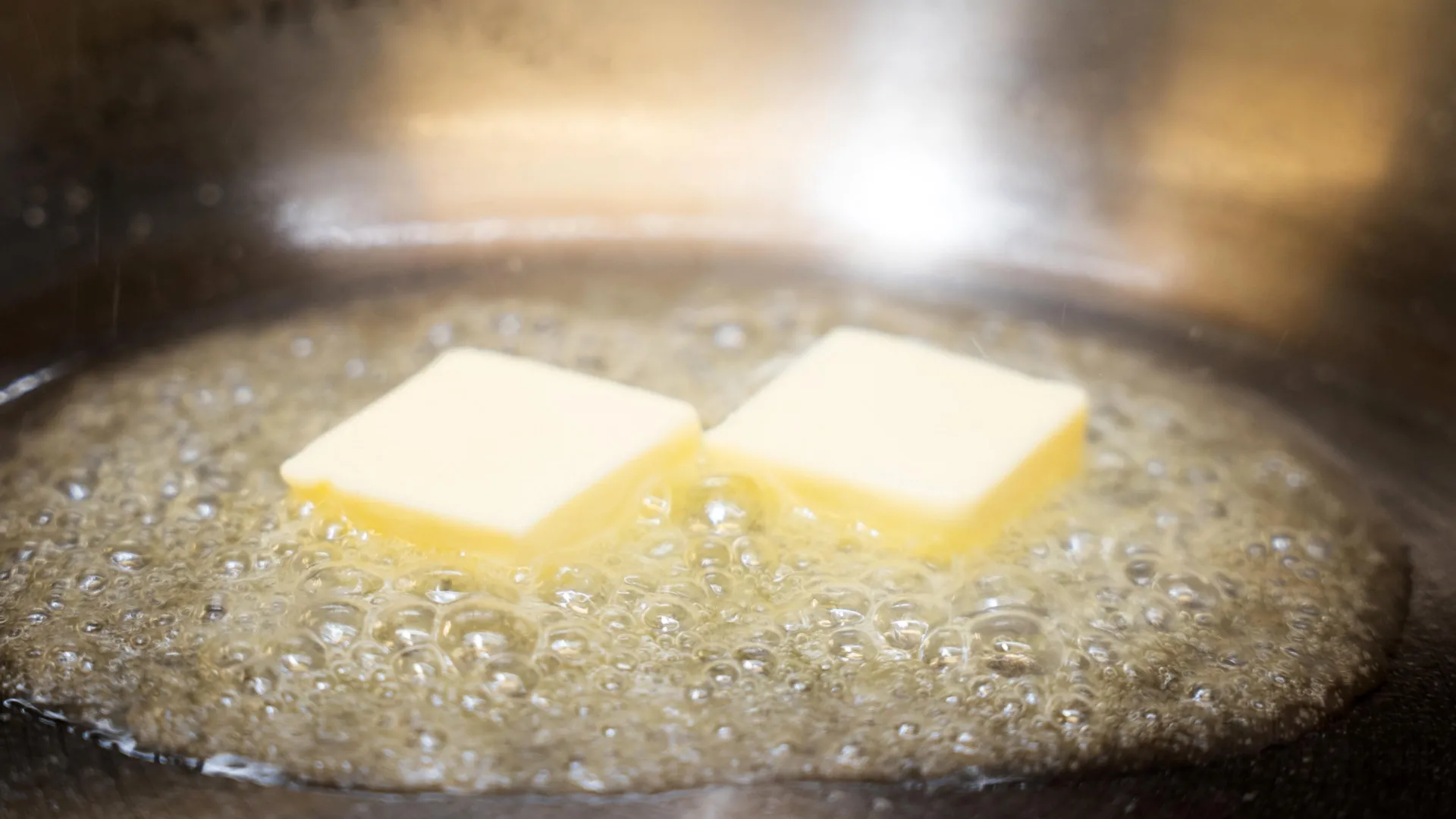
A food scientist examines the chemical properties of butter and margarine that determine their behavior during cooking. Both are emulsions—tiny water droplets dispersed in a fat matrix—but their composition differs significantly.
Butter consists mainly of saturated fatty acids, which form straight chains and allow fat crystals to pack tightly. This makes butter hard when cold and gradually soft at room or body temperature. Margarine, made from plant oils, contains mostly unsaturated fatty acids. Their double bonds create molecular kinks, preventing orderly arrangement. This difference affects melting points: margarine melts more precisely.
Margarine production uses interesterification, a process that rearranges fatty acids on the glycerol molecule, solidifying the oil without adding saturated or trans fats. Trans fats have been banned in many countries due to links with heart disease. Soft spreads skip this process, using higher water and air ratios, making them unsuitable for baking.
In flavor, butter gets its golden color from beta-carotene in grass eaten by cows. Margarine adds synthetic beta-carotene and flavorings like diacetyl to mimic butter. Butter contains lactose and proteins, which brown and create nutty, caramelized notes when heated—margarine lacks this ability.
During baking, butter's water content creates steam that separates dough into flaky layers. Margarine's variable water content performs less well. However, margarine offers consistency and longer shelf life. Health-wise, butter's fats are naturally occurring, while margarine is an ultraprocessed food with fewer saturated fats.


/nginx/o/2024/03/07/15931432t1hf5ce.jpg)