Firefighting drones tested in California and Alaska as US wildfires rage year-round
Drones capable of spraying water and fire retardants are being tested to snuff out wildfires early in California and Alaska, as climate change makes wildfire season a nearly year-long threat.
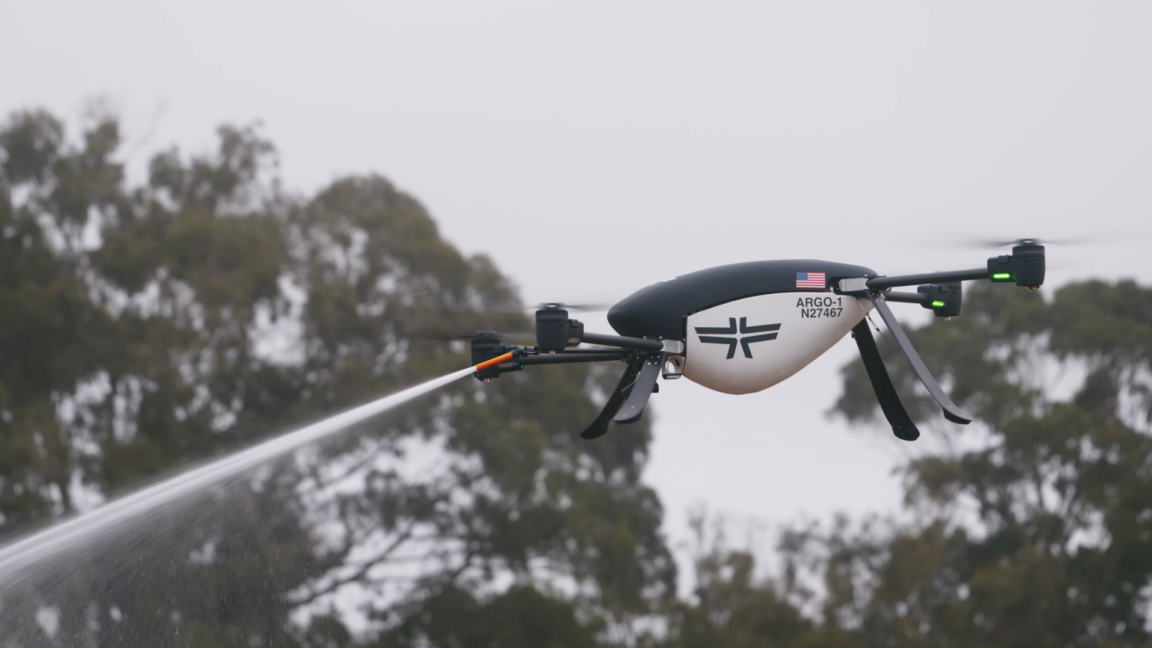
This summer, drones designed to spray water and fire retardants are undergoing field tests in California and Alaska to demonstrate a potential rapid-response tool for fighting wildfires. Most drones are significantly smaller than crewed aircraft and have shorter flight ranges, meaning they cannot replace large airtankers that deliver massive payloads of water or suppressants to remote wildfires. However, companies, fire agencies, and organizers of the $11 million XPRIZE competition are evaluating whether drones can help firefighting crews respond more quickly to small fires and extinguish them before they turn destructive.
The California Department of Forestry and Fire Protection (CAL FIRE) conducted a field test on July 15 involving five autonomous drones that together deployed between 500 and 1,000 gallons of foam for fire suppression, according to TV station KPMH. The demonstration was organized with help from the nonprofit FireWERX and California-based Seneca, which plans to make the drones commercially available in 2026. Each Seneca Argo-1 drone can carry about 100 pounds of water or retardant and operate in swarms of four to six. Once a human operator uploads a GPS waypoint, the autonomous drones fly toward the target and use onboard sensors to detect the fire's heat signature, as reported by HeliOps Magazine. The drones then find the optimal hovering altitude and line up to spray the fire one after another. Fully loaded, the drones have a round-trip range of 10 miles at an average speed of 30 mph, meaning they ideally need to be prepositioned in fire-prone areas or transported by ground vehicle first. However, each drone can fit in the back of a pickup truck with the tailgate down, and two people can manually carry the empty drones.