Hungary opens Communist-era secret service files
Prime Minister Peter Magyar's government begins publishing the names and key details of state security informants online on November 4. The move, after more than three decades of debate, is expected to reignite discussion about guilt under Communism.
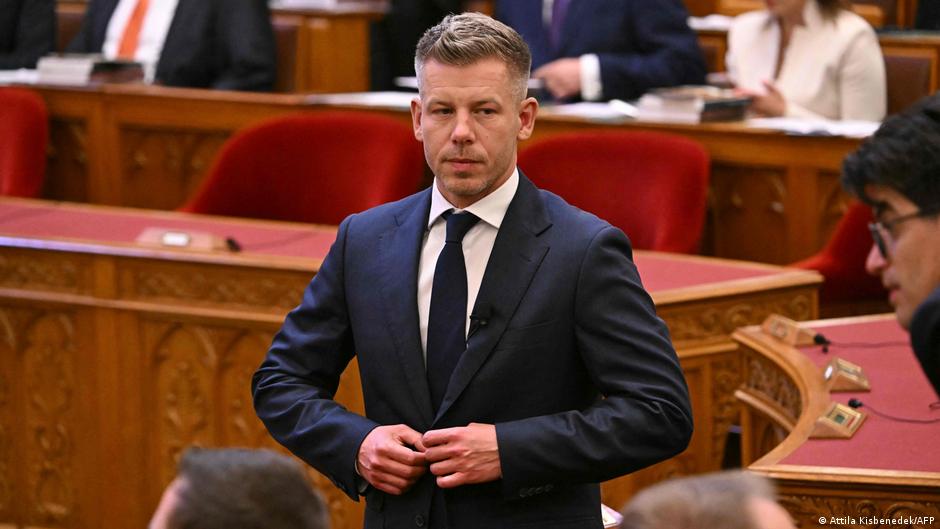
The Hungarian government, led by Prime Minister Peter Magyar, begins a full release of the Communist-era secret police "agent files" on November 4. The files contain the names of state security informants, some of whom cooperated voluntarily while others passed on information without knowing it. The date is symbolic: on November 4, 1956, tens of thousands of Soviet soldiers and tanks entered Hungary and crushed the anti-Communist uprising. Decades of dictatorship followed, sustained in part by the secret police.
A long-running dispute
Magyar's Tisza party had promised to make the files public if elected. After the Berlin Wall fell in 1989, civil rights activists and smaller parties called for their release. Jozsef Antall, the first post-Communist prime minister, a conservative, rejected the idea, as did Viktor Orban's long-ruling Fidesz party. According to the news platform Telex, Fidesz has voted against such plans more than 30 times since 2010.
A partial opening came in 1994 with the "agents law," which required government members, MPs and certain public servants to be screened for past work for state security. From 1997 citizens could view their own files, and access was widened in 2003, but informants' names stayed secret. Loosely worded provisions let bodies such as the Interior Ministry block the transfer of files to the Historical Archives of the Hungarian State Security (ABTL), and material was used in political struggles. In 2002, for instance, the Fidesz-affiliated daily Magyar Nemzet revealed that former Prime Minister Peter Medgyessy had been a Communist-era secret agent.
What changes
Parliament amended the law in mid-September. From November 4, databases with informants' names and key information will be available online, along with additional databases. Confidentiality provisions have been scaled back. Data on up to 60,000 of an estimated 150,000 informants will be released.
ABTL director Bendeguz Gergo Cseh cautioned that state security files cannot be fully trusted, as many documents are incomplete and many were destroyed. Historian Janos M. Rainer argued that publication would have made more sense right after the regime fell and is now largely symbolic. Historian Krisztian Ungvary welcomed the step, saying it will allow new research and fresh public debate.