Scholars: Language of Estonia's Poluverniki More Unique Than Previously Thought
Linguists at the University of Tartu have found that the language of the Poluverniki of northeastern Estonia had features similar to Northern Finnic languages. Their ancestors had long been assumed to be Votes.
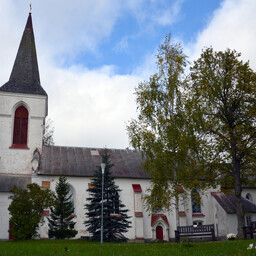
Linguists at the University of Tartu in Estonia have concluded that the language of the Poluverniki, a Lutheran community that lived on the northern shore of Lake Peipus, was more distinctive than previously believed. The study shows it had features typical of Northern Finnic languages, even though the group's ancestors were long considered to be Votes, whose language, like Estonian, belongs to the Southern Finnic branch.
The authors are Petar Kehayov, professor of Finnic languages at the University of Tartu, and Karl Pajusalu, professor of the history and dialects of the Estonian language and a member of the Estonian Academy of Sciences. Their findings appeared in the journal Linguistica Uralica.
Who the Poluverniki were
At the end of the 19th century, more than 5,000 Poluverniki lived in the Iisaku area. The figure comes from ethnographer Jüri Truusmann, who was probably counting members of the local Lutheran congregation. The name means “half-believers”: in the 17th century Swedish authorities restricted Orthodox worship and encouraged peasants to become Lutherans, but Orthodox customs survived. The community remained bilingual until the last decade of the 20th century. Today it no longer exists as a distinct ethnic group, and its heritage is preserved mainly by the Iisaku Museum.
What the study found
The researchers analyzed language material collected by Mari Must and Helle Heiter in 1962–1965, along with word lists compiled by Truusmann in 1895. The most striking feature is the absence of the vowel õ, which is typical of Estonian and Votic. Other vowels, such as o or u, replaced it. The speech also lacked the three quantity degrees typical of Estonian.
The authors conclude that the Poluverniki's ancestors spoke a language close to the coastal dialect of northeastern Estonia. Because Vaikla lies 42 kilometers from the Gulf of Finland coast, a Northern Finnic population probably reached further inland than previously thought.
The Poluverniki's Russian also showed features of Northern Russian dialects found hundreds of kilometers to the northeast. The authors offer two explanations that do not rule each other out: speakers of Northern Russian dialects arrived later, or Slavic settlers were already present in the early Middle Ages.
The researchers call on archaeologists and geneticists to combine excavation data with DNA analysis to shed more light on the Poluverniki's ancestry.