Scientists: Devil's Arrows stones hauled 11 miles, not from nearest source
A new study finds that the stones of England's Devil's Arrows monument were transported in prehistoric times from Brimham Rocks, roughly 18 kilometers away, rather than from the closer source previously assumed. The finding points to deliberate selection and considerable engineering effort.
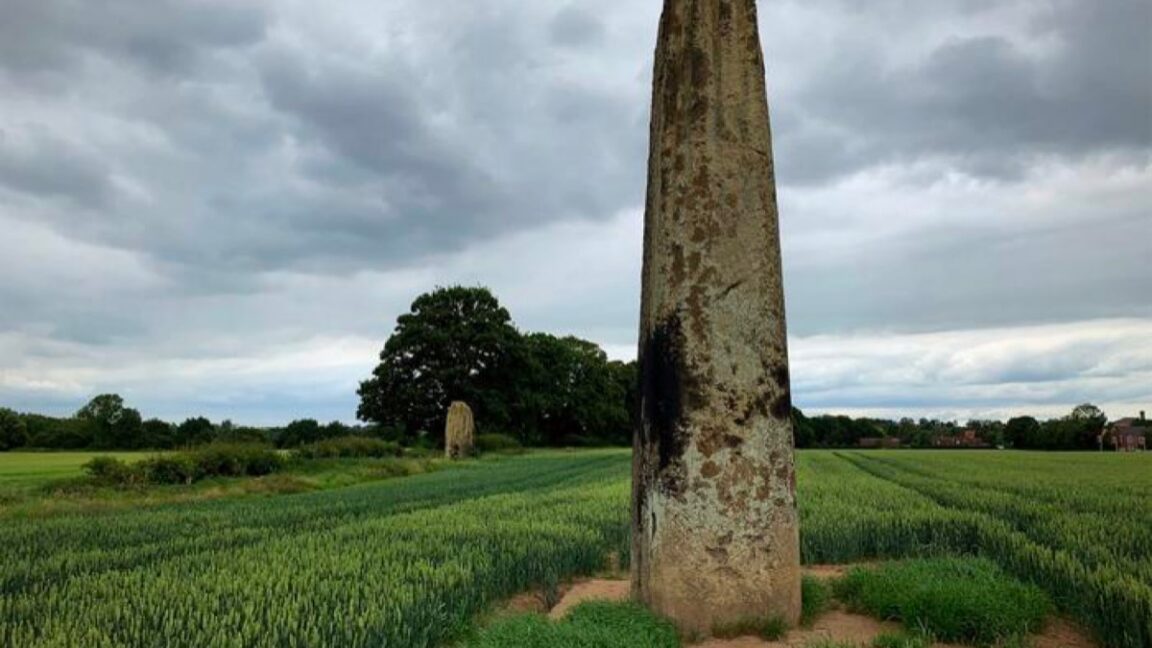
A research team led by Clarke conducted a new geological analysis of the three Devil's Arrows monoliths, along with the related Battle Cross monument and Peg Bridge stones. Samples were collected using adhesive tape applied to inconspicuous areas of the stones free of lichen or moss, then examined with field emission scanning electron microscopy and isotopic analysis of zircon and apatite minerals to establish a geological "fingerprint" for each stone.
The Devil's Arrows are made of coarse-grained sandstone. Plumpton Rocks, located closer to the monument, had previously been considered the likely source of the stones. The new analysis instead points to Brimham Rocks as the true origin — a site considerably farther away than previously assumed.
A deliberate choice, not convenience
The researchers also ruled out glacial transport as an explanation, based on reconstructions of regional ice flow. This means prehistoric builders deliberately moved the stones to the site themselves.
Clarke noted that the stones were not simply taken from the nearest available source but were deliberately chosen from a challenging landscape 18 kilometers away. He said moving them would have required significant planning, coordination, and engineering skill, suggesting the source location held particular meaning for the people who selected it.
A stone with multiple lives
The study also confirmed that the Battle Cross monument is made from one of the missing Devil's Arrows stones. The researchers concluded that reuse does not erase a stone's original significance but instead adds new chapters to its "biography" — from bedrock to a selected and transported prehistoric object, to part of a megalithic setting, and later to building material or a landscape marker. The study was published in Proceedings of the Royal Society A.