Estonia plans to allow more than 2,500 foreign skilled workers next year
Estonia's Ministry of the Interior plans to allow 2,569 skilled foreign workers to come to the country next year in sectors facing labour shortages. The rules stem from amendments to the Aliens Act that take effect in 2027.
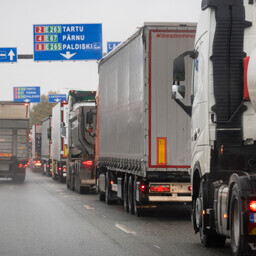
Estonia's Ministry of the Interior plans to allow 2,569 skilled workers from other countries to enter the country next year to ease labour shortages in certain sectors. The plan rests on amendments to the Aliens Act that will take effect in 2027 and allow temporary residence permits for foreign nationals to work in Estonia. The ministry's draft regulation has been sent for inter-agency coordination.
Which sectors are covered
The measure applies to companies in sectors listed by the government. The list contains 12 sectors, including electronic and electrical equipment manufacturing, production of motor vehicles, trailers and other vehicles, machinery and equipment manufacturing, freight transport and warehousing, chemicals and pharmaceuticals production, wood processing, textiles, metal products manufacturing, and the repair and installation of machinery and equipment.
For these sectors the government approves a list of 20 related fields of activity, valid for five years. In conditions of economic growth, foreign workers up to 0.2% of the country's permanent population may be brought in; otherwise the limit is 0.1%. Because the economy is forecast to grow by 2.5% this year, up to 0.2% of Estonia's population, or 2,569 people, may be admitted next year.
Rationale
The explanatory memorandum says that, owing to demographic change, the supply of labour in Estonia cannot meet companies' growing demand for skilled workers. Automation, education and retraining are being relied upon, but these measures cannot supply new workers quickly enough. More flexible options for attracting foreign labour are therefore being created, while keeping wage requirements and limits on the number of residence permits in order to protect the Estonian labour market and prevent mass immigration of cheap labour.
Three criteria were used to compile the list: the forecast demand for labour, the share of exports in a sector's revenue, and the sector's average annual gross wage. By these calculations, the sectors with the greatest shortage are electronic and electrical equipment manufacturing, followed by motor vehicle and trailer manufacturing and machinery and equipment manufacturing.
Programming was excluded because foreigners in that field already have an exemption from the general immigration quota, and energy was left out because of heightened security risks. Interior Minister Igor Taro has sent the draft for inter-agency coordination, which ends on 13 November.