Latvia Lacks Systematic Teaching of Critical AI Verification
While Latvia has started teaching AI usage in schools and universities, unlike Estonia and Finland it has yet to introduce mandatory instruction on critically evaluating AI-generated results.
The Difference Between Use and Verification
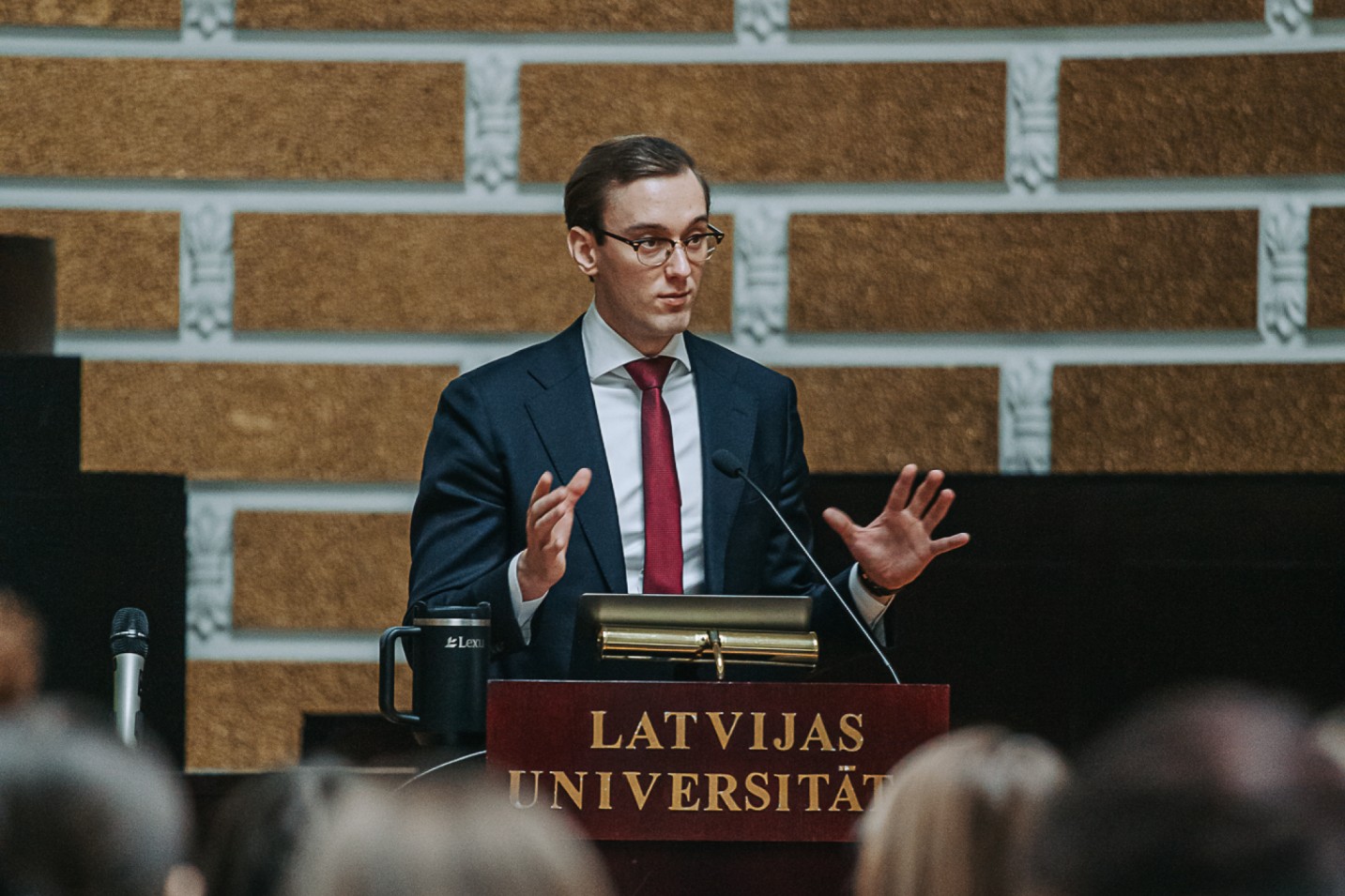
AI tools are increasingly used in daily work and education, but Latvia still lacks a systematic approach to teaching how to critically assess AI-generated information. This is highlighted in an opinion piece by Mārtiņš Odobērs published in the magazine "Ir", analyzing the situation compared to neighboring countries.
Odobērs notes that his company "Lexu AI" has developed a legal research platform integrated into the University of Latvia Faculty of Law and used by law firms and government institutions. The platform is built on a principle: if no verifiable source exists, it does not provide an answer. This approach differs from general AI tools that always generate a response, even if incorrect.
Estonia and Finland – Examples of Systematic Approaches
In 2025, Estonia launched a nationwide program "AI Leap" ("TI-Hüpe") on the initiative of President Alar Karis. It covers all 154 general education schools, involving about 20,000 students in grades 10-11 and approximately 4,900 teachers. Since August 2025, more than 60% of teachers use AI tools weekly. The program explicitly aims to develop AI and media literacy skills to strengthen critical thinking. Total funding for the pilot project is €4 million.
Finland has been developing critical thinking about AI for over fifty years, starting with media literacy in school curricula. In 2014, content was updated to include critical evaluation of social networks and smartphones. The Finnish National Agency for Education integrated AI literacy into all education levels in 2025, with guidelines focusing on AI errors and inaccuracies.
Latvia's Initiatives and Gaps
In April 2026, Latvia's Ministry of Education and Science launched its first nationwide AI initiative in schools, and by 2029, €33.4 million will be invested in higher education digitalization. However, these programs do not include a mandatory course on critical evaluation of AI-generated results. No bachelor's program – in law, medicine, journalism, or engineering – currently requires such a course.
Rīga Stradiņš University developed the first guidelines for AI use in studies in 2024, but they are advisory. The University of Latvia has introduced a controlled AI environment and plans mandatory oral exams for final theses starting next year. Yet these remain isolated initiatives rather than a systematic approach.
Risks and Future Steps
Odobērs emphasizes that the main problem is AI's ability to make convincing errors – people believe information that sounds smart but is false. A study before Estonia's program showed that 64–90% of students already use commercial AI tools, often to complete tasks faster, which can hinder critical thinking.
Three steps are recommended for Latvia: expand the AI program in schools with measurable competency standards including error identification; introduce a mandatory course on critical AI evaluation in universities; and adopt a systemic approach instead of relying on individual initiatives.