Estonia protects 15 more shipwrecks, including steamer Success sunk in 1885
Estonia has placed 15 more shipwrecks in the Baltic Sea under state protection, including the cargo steamship Success, which sank in 1885. Archival records allowed researchers to identify that vessel.
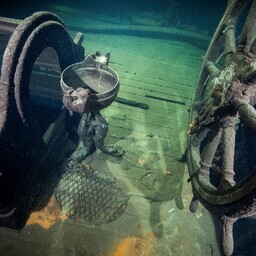
Estonia has placed another 15 shipwrecks in its Baltic Sea waters under state protection, among them the cargo steamship Success, which sank in 1885. More than 100 underwater heritage sites in the country are now protected. The status means that the planning of maritime activities must take the preservation of wrecks into account.
The newly listed group includes 12 sailing ship wrecks, the destroyer S31, a steamship and the Success. Four lie in internal waters, nine in territorial waters and two in Estonia's exclusive economic zone. Underwater archaeologist Maili Roio told ETV's morning show "Terevisioon" that Baltic conditions preserve wrecks well, but the sea is being used ever more intensively, so the state must consider underwater heritage.
Restrictions, not a ban
Protection does not mean the surrounding sea can no longer be used. Certain restrictions apply in designated areas, and planned activities must allow for the wreck's preservation. Wind turbines, for example, must be placed far enough away that construction does not damage a wreck. The Estonian Transport Administration surveys the seabed every year and finds new wrecks, but protection is not granted at once, because preliminary information is needed on the wreck's type, condition and possible contents.
Three examples
One wreck lies deeper than 60 meters. It drew archaeologists' attention because of its narrow, elongated, willow-leaf shape. It is tentatively dated to the 16th or 17th century. Footage from an underwater remotely operated vehicle shows two masts, indicating a two-masted sailing ship. Its exact age and origin remain to be established, and the depth makes research harder.
Another is a sailing ship from the 17th or 18th century, with parts rising several meters above the seabed. Working with the National Archives of Estonia, researchers used archival records to identify one wreck as the Success. The ship was sailing from Kronstadt to London when it sank in Estonian waters in July 1885. It had earlier run aground in the Gulf of Finland and been damaged, and some cargo was thrown overboard to get it moving again.
A third is a 19th-century sailing ship that still has its figurehead. Roio said such details are often broken off or damaged by trawling, which has long been one of the main causes of damage to wrecks in Estonian waters.
The protection also helps Estonia meet its obligations under UNESCO's 2001 Convention on the Protection of the Underwater Cultural Heritage.